Tag: The Robb Review

Making Kids Read Fast is NOT the Goal of Fluency Instruction; Making Meaning Is

Timothy Rasinski, Ph.D.

In my previous blog posting for The Robb Review, I focused on what should be the real goal of phonics instruction – to get kids to the point where they don’t have to use phonics much in their reading.  We want students to be so proficient and efficient at word recognition that minimal attention is given to word decoding and maximum attention can be directed toward comprehension.   Staying with this theme of reading instruction goals, I’d like to focus on reading fluency and state right off the bat that the goal of fluency instruction should not be to make kids read fast.    It has been this incessant focus on increasing reading speed, I think, that has unfortunately given reading fluency a bad rep.

What is Reading Fluency?

Fluency has been called the neglected goal of the reading program (and it is) (Allington, 1983); it has also been called the bridge from word recognition to comprehension.     I like that bridge metaphor a lot. Fluency is the critical link to making meaning while reading. There are two components to fluency. The first is automaticity in word recognition – the ability to recognize words so effortlessly that most of a reader’s attention can be devoted to comprehension.   Automaticity is the part of the bridge that links to word recognition.

The other part of the fluency bridge is called prosody or reading with expression.  This is the link to comprehension. When a reader reads with appropriate expression that reflects the meaning of the text, she is striving to comprehend that text.  This is the part of fluency that is often neglected in instruction; yet it is critical for comprehension to occur, even when reading silently.

How Should We Teach Fluency?

As with anything we want to become fluent at (e.g., speaking, driving, golf, cooking), fluency is developed through practice.   In reading, we have several forms of practice that can and should be employed. These forms of practice include wide reading, assisted reading where a reader reads while simultaneously hearing a fluent reading of the same text by a partner or recording, and repeated reading where a reader reads a text several times until she achieves fluency on that text (Rasinski, 2010).    In all these forms of practice the goal should be reading for meaning, and if reading orally, to read with appropriate expression that conveys meaning to anyone who may be listening.

How Does Reading Speed Fit into the Fluency Equation?

Reading speed (words read correctly per minute) is an indicator of word recognition automaticity and is often called the oral reading fluency (ORF) score.   The more automatic or effortless you are in recognizing words in text, the faster your reading becomes, AND the more attention you can devote to comprehending the text as opposed to analyzing the words in the text.    Reading speed is an indicator or consequence of the fluency component of automaticity, BUT it is not fluency. Our reading speed increases as our fluency improves, not the other way around. I often say that I want our children to become fast readers just the way I am and all of you reading this blog are reasonably fast readers;  but I want them to become fast the same way we all became fast readers – through lots and lots of authentic practice in reading.

So go ahead and use DIBELS and AimsWeb ORF scores, or Hasbrouck and Tindal’s norms (Words Correct per Minute) cautiously and sparingly as indicators of students’ growth in automaticity, but please, please, please do not let children think that you are trying to get them to read faster.   The increase in reading speed (as well as improvements in reading with expression) will happen with authentic reading practice, not with overt instruction or implied emphasis on reading fast.

Fluency is More than Automaticity

A few years ago, I came across recordings of arguably two of the most fluently read speeches in American  history – Martin Luther King’s “I Have a Dream Speech” and John F. Kennedy’s inaugural address “Ask Not What Your Country…”     I subjected the oral readings of both of these speeches to an ORF (reading speed) assessment. In both cases, Dr. King and President Kennedy’s readings of their speeches may have landed them in a remedial reading class based on their very low ORF scores.     I am sure they were both automatic in their word recognition, and they could have read those speeches quickly. But doing so would have taken away from the meaning they were trying to convey. Because they were automatic in their recognition of the words in their speeches they were able to devote their attention to making and elaborating on the meaning they wished to share orally. They raised and lowered their voices, had dramatic pauses, changed volume and tone in order to more effectively to deliver their intended meanings to their audiences.   What truly made those speeches fluent was not the speed, but the expression (prosody) that they embedded in their readings.

For fluency instruction to truly work we need to see the goal of fluency as expressive oral (and silent) reading that reflects the meaning of the text.    When we make expressive and meaningful reading of texts the true goal of fluency (and avoid putting emphasis on fast reading) we will see significant improvements in reading comprehension (as well as reading speed).

You can find resources on teaching accurate and automatic word recognition and expressive prosodic reading (i.e. fluency) at Tim’s own website – www.timrasinski.com

Please see also my new book on reading fluency (written with Melissa Cheesman Smith) – The Megabook of Fluency, published by Scholastic.

References

Allington, R.L. (1983).  Fluency: The neglected reading goal.  The Reading Teacher, 36, 556-561.

Hasbrouck, J., & Tindal, G. A. (2006) Oral reading fluency norms: A valuable assessment tool for reading teachers. The Reading Teacher, 59(7), 636-644.

Rasinski, T. V. (2010).  The fluent reader:  Oral and silent reading strategies for building word recognition, fluency, and comprehension (2nd edition).  New York: Scholastic.

Loading

Finding Common Ground. Time to End the Great Reading Debate!

Mrs. Rita M. Wirtz, MA

There’s so much going on right now in the world, in particular, I’m extremely concerned about the resurfacing of the “reading wars.” I have no control and can’t fix much, but I can help with re-conceptualizing why educators are so quick to “throw the baby out with the bathwater.” To tell you my truth, I think it’s ridiculous, so I’m taking a deep dive into why this is happening as well as offering some suggestions.

I’ve taught reading for over fifty years, incredible to say that. Besides Pre-k to sixth grade School Principal, Curriculum Consultant for Sacramento County Office of Education, Keynote Speaker, Seminar Leader, etc, I had an interesting experience for many years that grew out of my masters’ thesis about delinquency and poor reading connection. At that time I was a Title 1 Program Evaluator for correctional education programs, first in Arizona, then California. 

I ‘walked the line’ at DVI (Duel Vocational Institution), helped teachers working with inmates in prison classrooms, even in cell study at San Quentin, where basically our teachers slid packets under doors and taught through those doors. In fact, I visited all the prisons except for Folsom which didn’t have under twenty-one-year-old inmates and therefore, no ESEA program. When President Johnson initiated Great Society programs, the best of the bunch in my opinion was Title I, designed to bridge the learning and reading gap, but I doubt you knew it also included juvenile offenders, hoping to stop recidivism in its tracks.

Being unable to read well is a detriment to success or basic functioning in society. We all agree to that, but how to get there has been a great, big, continual mess. I say that because I’ve never used any program (scripted) that I thought was perfect in itself to teach reading. In my opinion, it remains up to teachers to know how to teach the requisite skills. Programs come and go; the skills remain the same. Yet, I doubt many or most teachers, Pre-k to grade 12 have had much in the way of reading instruction courses during their Credentialing program.

I was fortunate to be mentored by Dr. Jeanette Veatch at Arizona State University, Tempe, Arizona, and I interned at their Reading Clinic. Veatch was indeed a whole language and language experience guru. And “yes,” I was and still am a believer in Balanced Literacy as well as Reading Recovery and the work of Marie Clay. I also taught with Words in Color, ITA (Initial Teaching Alphabet), Sir James Pitman, England, (1960s); Laubach Literacy, Distar, and Reading Mastery, so I know the differences between following a program with fidelity and developing a curriculum that responds to and meets all children’s needs.

Know Your Students’ Reading Levels

Independent Reading Level: This is the highest level that students read fluently, without help, and have recall and comprehension. Ensure that word recognition errors (miscues) don’t exceed more than one per hundred words of running text so that comprehension is 90% or better.

Instructional Reading Level: With assistance, students can read at their instructional level with errors not exceeding more than five per one hundred words of text and comprehension of 75% or above. 

Frustration Reading Level: This is thought to be less than seventy percent comprehension, but it’s more obvious than that. You just know when the student feels frustrated.

Select readable books–easy selections for beginning and striving readers, including picture books that feature short sentences and simple words. Obviously, more challenging selections have longer and more abstract words. Type size counts; smaller type is harder to read.

Easy Hack: Quickly Find Books at Students’ Reading Levels

My favorite way to see whether a book is at your student’s independent or instructional level is to do the “five finger technique.” Select a book page with at least one hundred words, ask your student to put down a finger each time there is an unknown word. If there are more than five fingers per page, the book is probably too hard. If the child wants to read it anyway, think Dewey and the importance of interests. Let the child read the book, just provide backup assistance and scaffolding so they experience success.

Cueing: This Is What It Means. 

I have taught these strategies and still do, on occasion. It helps some children. I caution, what if the student doesn’t know how it’s supposed to look? Or sound like? So I agree cueing isn’t the best way to teach children new words. But completely throw it out? Again, no way.

Graphophonic: “Does it look right?” What letter or sound does it begin with? Point to the letter or word. Ask: does this look familiar? Take another look at this. What does this letter (or word) look like? Look for a smaller word inside the word. Check this with a word you already know.”

Syntactic: “Does it sound right? Can you say it another way? What other word or phrase might fit here?

Semantic: “Does it make sense? Look at the picture again. Reread the sentence.”

Say: Does it look right to you? What sound or letter does it begin with? Point to the letter (words). What other sound might fit here? Does this make sense? etc.”

Context Clues: Know and Do or Dont

Yes, I still teach context cues or clues, as I said earlier, but not as a primary strategy.

Practice looking at words surrounding new words, to gain meaning. Often by simply looking at initial consonants and other sentence parts, the child infers the unknown word.

1. Read aloud a sentence in which an unknown word is omitted. Ask what a possible word might be.

2. Provide sample sentences that show that context clues may come before or after a word.

3. Provide sample sentences with contextual clues in form of a phrase, sentence, or paragraph.

Recognizing Sight Words. Start with Real Words, Concrete Objects:

I don’t recommend teaching sight words as the primary focus. But yes, I teach sight words. Use experience, environmental print, and sometimes word lists to practice sight words. Start with the easiest words first, especially those things concrete and real, such as objects around the house or in the natural environment.

The problem with graded sight word lists is they include such abstract words. For example, what is a “the?” It’s always better to start with real things, concrete objects, called “actuals” or “realia”. Word walls are way better than data walls.

Structural Analysis Helps Students Figure Out Unknown words:

Besides sounding out words, another way to decode or recognize new words is by taking them apart. This process is called structural analysis.

Teach word parts, including roots, prefixes, suffixes, compound words, syllables, word families and contractions.

About Phonics, the Alphabetic Code Approach. Common Ground.

While there are certainly inconsistencies in our language, phonics works about 80-85% of the time, so I think it’s a really useful tool to teach kids, at all levels. Beginning Reading Champions are word detectives learning letters and combinations of letters. But all students encounter unknown words and it’s okay to review basic decoding strategies. It’s not baby; it’s smart. Teach consistencies of our language.

Finding Common Ground Right Now

We are all reading teachers, schoolhouse, and home. It’s important we have some idea of the reading process, and how to teach skills not just programs, to best meet kids’ needs. I hope this helps you, by validating what you know and maybe an idea or two to explore.

The big news right now is a shift in the meaning of Balanced Literacy, or as Calkins says a “re-balancing”. I am intentionally not discussing fluency here and comprehension building, which of course are super important, but another day.

I have many articles already written in my blogs about how to build fluency and comprehension. By the way, I’m not a fan of the fluency testing that equates reading speed or rate with fluency.

Grouping and regrouping should be continual, based on skills known and unknown. So that’s it for now, I hope I have offered validation for your belief in self-selection of books, teacher read-aloud, and helping children find joy in reading all kinds of books– whether for pleasure reading or info-text, or books online.

Hearts filled with hope and love…. never give up, never. We stand strong, together. Leaving footprints on your reading hearts, Rita

I’d love to hear from you! Contact me:

Twitter: @RitaWirtz

FB: Rita’s Facebook

Website: RitaWirtz.com

Instagram: @ritamwirtz

Books: Reading Champions! Teaching Reading Made EasyStories From a Teacher’s

HeartReading Champs

Loading

Is Every Student a Protagonist in Your Classroom Library?

By Laura Robb and Evan Robb

Classroom libraries can be conduits for change, providing all children access to texts that affirm who they are, open possibilities for what they can become─and help them to develop the habit of reading. Teachers have tremendous power to amass text collections that develop students’ academic, emotional, and social selves. In this blog, we share the ins and outs to create a classroom library that adds joy to your school days─and affirms for all children that they belong.

The academic payoff of classroom libraries is old news…

There are decades of research to support the adage that children get better at reading by reading. In fact, whether you are a teacher or a leader reading this blog, we encourage you to use the research on why students become readers to advocate for funding classroom libraries. Developing successful, lifelong readers has everything to do with reading volume, offering students choice in what to read, and using outstanding children’s and young adult literature (Allington, 1997, 2012, 2014; Anderson, Wilson, and Fielding, 1998; Krashen, 2004). Yet, it’s important to acknowledge that we are all newbies regarding how to use books in ways that align with culturally sustaining pedagogy.

…but how teachers create an optimal collection is breaking news

Regardless of background, all teachers need guidance and assurance on finding books that provide positive, identity-building stories for all children. The field of culturally sustaining literature has exploded in the last few years, and the benchmarks have shifted. For example, publishers have recognized that it’s not enough to show characters of color or sprinkle them into storylines; they need to seek out own-voice writers and illustrators representing a wide range of ethnic, cultural, and religious backgrounds.

Children want to see themselves as protagonists, not slated to secondary characters. All children crave involving, entertaining, and nuanced stories and themes; they want normal, not noble. They know darn well when a book is pandering to stereotypes rather than written from an authentic perspective.

Luckily, great books in just about every genre abound! Tap the expertise of your school librarian and see the box below on a few of our favorite sources for diverse literature. Then, use the tips that follow to build the classroom library of your dreams.

1. Define diversity

Having a working definition of diversity helps you gather a strong collection. For example, you want to think about diversity in terms of abilities, race, ethnicity, culture, home language, gender identity, and so on. You want to reflect on what it means to shift away from assuming that white, middle-class, English-speaking is the norm. It’s not. Diversity is inclusivity. It’s not just about cultural and ethnic breadth.

2. Be asset-based

How you select a read-aloud, and how you talk about book characters, influences students’ sense of one another and themselves. For example, if you have bi/multilingual students in your classroom, select books that reflect their backgrounds and celebrate those learners’ ability to develop more than one language simultaneously. Also, pose questions in ways that are open-ended and invite all kids to respond. “What is familiar here?” “What is the character realizing now?” Older books in your current library? Scrutinize them to make sure they don’t perpetuate negative, patronizing stereotypes.

3. Be ruthless about relevance

What engaged you in terms of topics and authors as a youth might not resonate with most children today. So, fill the shelves with books that are relevant to students’ interests and life today.

Related Content

Collage of Best Eighth Grade Science Projects and Experiments

40 Great Eighth Grade Science Fair Projects and Classroom Experiments

Collage of Winter Science Activities

30 of the Coolest Winter Science Experiments and Activities

40 Ways Teachers Can Make Extra Money

4. Consider reading range

Include lots and lots of books on grade level, but plenty below and above grade level.

5. Go big or go home

Each classroom library should have a minimum of 600 unleveled books and a goal to increase the collection to 1,000-1,500 over a couple of years. Pumping up students’ reading volume requires a voluminous approach to books. A few favorite diversity resources:

  • Lee & Low Books, which was founded in 1991, is now the largest multicultural book publisher in the United States.
  • Reycraft Books, a relatively new book line, publishes and licenses books for all children by authors and illustrators around the globe that have unique stories to tell.
  • Wordsong is this country’s only imprint dedicated to publishing children’s poetry.
  • Versify is a children’s imprint launched by award-winning author Kwame Alexander. It publishes books that celebrate the lives and reflect the possibilities of all.
  • We Need Diverse Books is a nonprofit organization of book lovers that advocates essential changes in the publishing industry to produce and promote literature that reflects and honors the lives of all young people.
  • The Brown Bookshelf is designed to push awareness of the myriad Black voices writing for young readers. Their flagship initiative is 28 Days Later, a month-long showcase of the best in Picture Books, Middle Grade, and Young Adult novels written and illustrated by Black creators. You can read more about the members of The Brown Bookshelf here.
  • Penguin Random House Creative Writing Awards (CWAs) is a scholarship program designed to highlight, encourage, and support diverse student voices. Eligible for high school seniors, please visit the link for more information.
  • Corwin Press has an equity line of professional books for teachers and leaders. Launched by Dan Albert more than 20 years ago, its authors have been at the forefront of culturally sustaining pedagogy.
Each classroom library should have a minimum of 600 unleveled books and a goal to increase the collection to 1,000-1,500 over a couple of years. Pumping up students’ reading volume requires a voluminous approach to books.

6. Stock all text types and genres

Use these ideas (and the linked book lists) to help you make your library diverse in terms of genres.

  • Poetry
  • Picture books
  • Graphic novels/manga
  • Realistic fiction
  • Historical fiction
  • Science fiction
  • Fairy tales (include renditions authored and illustrated by people of color/representing versions of the tale from various countries/cultures)

14 Genres to consider adding to your classroom library.

7. Connect instructional and independent reading

The classroom library should feel recess-like recreational to students! You want them to view books as a break from some of the tasks and learning at school that might be harder for them. That said, as you plan your units, from ELA to math, to science, to history, add books to the library on topics your curriculum addresses.

8. Keep the library kinesthetic, not static

As the teacher, you are wearing the hat of the bookseller. And as every bookseller knows, the secret to success is to entice browsers with appealing, new features. Students will love it! Invite students to help you organize the library at the start of the school year. Hand out a student reading interest survey, so you discover kids’ interests and what kinds of books they like. Every few weeks, layer in newness.

For example, display “This week’s picks” and invite students to do the same in subsequent weeks. Place a box in the library for students to make anonymous suggestions for books, topics, authors; sometimes kids are too shy to ask for a topic publicly. Invite students to schedule 60-second book talks to promote favorites to peers. Invite your principal to get on the school’s intercom once a week and tell about a favorite book, and have students also share favorites that way.

 9. Advocate for classroom libraries

We believe that with a little ingenuity, any teacher can develop a class library, even in schools whose leadership don’t see classroom collections as a priority. Advocate for the principal to shift budget money allocated for a new reading program to stocking every classroom with an abundance of books. Collaborate with other teachers to make classroom libraries a school-wide initiative, a badge of honor!

10. Collaborate and coach one another

Launch a professional development inquiry around best practices for cultivating independent reading. To help you and others develop excellent practices throughout the school, use the following checklist. (Many more checklists can be found in our book Schools Full of Readers.)

Is Your Classroom Library Culturally Sustaining?

What tips do you have to create a classroom library? Share in the comments below.

Is Your Classroom Library Culturally Sustaining?

Loading

Keep Your Eye on The Child

Young Literacy Learners Take Center Stage

By Mary Jo Fresch

            I began my teaching career as a third-grade teacher in 1974. The district reading program was a synthetic phonics series. I regularly had students required to repeat the second-grade reader because they had failed to keep pace with their peers. These students needed constant support to progress and hopefully “graduate” to the third-grade reader. By the end of my first year, I knew the series was not creating successful readers. The focus seemed to be exposure instead of mastery.

I faced an equity issue for my students. I needed to hone my ability to recognize proficiency differences and address individual “bottlenecks” in literacy learning. And I needed to bring the joy of reading to my students.

Unlocking what students can and cannot yet do

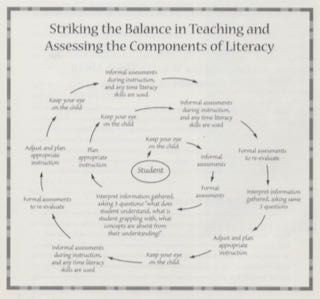
My undergraduate program included one course in teaching reading, just enough to skim the surface of what a primary teacher needed to know.  I realized a reading specialist master’s degree would benefit my students and me. That coursework turned the tables…instead of focusing on materials, flashcards, and games, I focused on students. I discovered ways to peek into the head of a learner struggling to read words, read fluently, comprehend, and build vocabulary. Years later, a Ph.D. in Language, Literacy, and Culture solidified my belief that teachers must focus on what the student can successfully do and plan engaging, joyful activities to nudge new learning along. While teachers need to address the scope and sequence of reading skills, they must “keep an eye on the child” to strike a balance between teaching and assessing. What are students telling us they almost understand but not yet? The answer to that question is the sweet spot for planning lessons that challenge but do not frustrate them.

From: Fresch, M.J. & Wheaton, A. (2002). Teaching and Assessing Spelling: Striking the Balance Between Whole-class and Individualized Spelling.

Language learning for young readers

            Literacy development in reading, writing, and word knowledge occurs in sync – that is, they are parallel processes. Each informs the other and addressing all of them as students learn is critical. When you think about it, writing is easier than reading. Let’s say a student is trying to write elephant. Knowledge of letter/sound relationships will help students predict the spelling. (My personal campaign is for teachers to not refer to students’ unconventional spellings as invented – rather they are predicting the spelling based on their current operating knowledge of the language. These predictions will change as students experience more print.). So, the student may write lefan or elufint – allowing us to observe current understandings and plan instruction. But, if that same student comes across elephant in text, the work is much harder to lift the print from the page. They need to know something about short vowels, the ph sound, the nasal nt, and multi-syllabic words – and which of these might be the stumbling block is up to the teacher to assess.

Giving students strategies to decode is essential to make them independent readers. They need knowledge in letter/sound relationships and how to consider what might make sense both contextually and semantically. Thus, my work over the years has turned to helping students understand how English works. Power over the language provides independence in reading and writing. “Immediate” word identification aids in fluent reading and allows the reader to focus on comprehension. The need to “mediate,” or pause and consider what a word might be, distracts the reader from understanding the text. Accurate and automatic decoding are fundamental to comprehension. When we assess (by the way, the Latin origin of assess means “to sit by” – exactly what we do when we are “keeping an eye on the child”), we can observe the strategies students can rely on and which they need scaffolded.

Recently David L. Harrison, Tim Rasinski, and I partnered (in press) to write a two-book series for Scholastic. By combining Edward Fry’s list of 38 common, high-frequency phonograms with Wylie and Durrell’s list of 37 we created a powerful list of 52 rime families. David wrote poems, Tim created word ladders (one focused on phonics; one on vocabulary), and I wrote a wide range of language arts lessons. Students can learn hundreds of words through examination of word families and have a powerful strategy to decode words. David and I also partnered (2020) to create a book that focused on fun and engaging aspects of the English language (six types of “nyms” such as acronyms, eponyms, synonyms, retronyms; similes; metaphors; idioms; shades of meaning; and word origins). In all of this, the heart of my work is to make language memorable, rather than memorized.

We pique students’ interest in language when we are curious about words. That interest will have them looking at words in new and memorable ways. This also means they will take what they know into writing. When students ask why the “silent/magic e” doesn’t make the vowel long in words such as love, I often hear teachers say, “that’s an exception.” But there really is a rule…English words do not end in “v.” Over time, the “e” was added to those words, but the pronunciation did not change. Once you tell your students that story they will not only remember to add the “e” but will be digging through print to see if they can prove you are wrong. What a fun way to solidify the “rule” and get them engaged in self-selected print to build confidence!

In sum, you can be assured that I say, systematically follow a scope and sequence, but do it in fun and engaging ways that take the individual learner into consideration.  Give students independence in unlocking the language. We can never memorize every word, so let’s find ways to make language memorable. Texts that play with words and make students want to read and reread builds skills and confidence. Writing self-initiated texts puts their operating knowledge to work (and on display for your formative assessment). Discussing about what we read makes students understand we are about “word recalling” and not “word calling.” And all of these put our young learners at center stage…exactly where they should be in our classrooms.

https://maryjofresch.com

fresch.1@osu.edu

References

Fresch, M.J. & Harrison, D.L. (2020). Empowering Students’ Knowledge of Vocabulary: Learning How Language Works (Grades 3-5). Urbana, IL: National Council of Teachers of English.

Fresch, M.J. & Wheaton, A. (2002). Teaching and Assessing Spelling: Striking the Balance Between Whole-class and Individualized Spelling. New York: Scholastic.

Harrison, D.L., Rasinski, T. & Fresch, M.J. (in press) Partner Poems & Word Ladders for Building Foundational Literacy Skills: Fluency, Phonics, Phonograms, Spelling, Vocabulary, Writing, and More (Book 1 – Grades K-2). New York: Scholastic.
Harrison, D.L., Rasinski, T. & Fresch, M.J. (in press) Partner Poems & Word Ladders for Building Foundational Literacy Skills: Fluency, Phonics, Phonograms, Spelling, Vocabulary, Writing, and More (Book 2 – Grades1-32). New York: Scholastic.
Loading