Tag: The Robb Review

Flip The Traditional Teacher Read Aloud

By Lester Laminack

Enjoy, as Lester guides you from teacher-centered to student-centered teacher read alouds!

When you reach the end of an article, a story, or a book do you reach for your notebook to answer a set of questions written by someone else?  Do you feel that your understanding of what you have read, your worth as a reader, hinges on being able to give the answers to someone else’s questions?  Probably not.  Yet it seems that much of our reading instruction relies heavily on having our students answer a set of questions after they complete a reading assignment.  Following reading with a set of questions is a longstanding practice in literacy education.  In fact, many commercial reading programs follow this pattern.  One well-known program assigns a point value to each title, then has the children read and log on to a computer to read and answer a set of 10 multiple choice questions. Other programs have students read then write answers to similar questions. And if we are teaching from a literature-based approach that doesn’t rely upon a commercially produced program we tend to have our own questions to hold our students accountable.

Questions Can Create Patterns

As teachers, most of us were introduced to Bloom’s Taxonomy as undergraduates in a teacher education program.  We likely practiced developing questions for each of the levels in the taxonomy and began our teacher careers believing that it was our charge to develop good questions that would hold our students accountable and yield proof that they read and understood the assigned text.

We sat with our notepads at hand and read the books, articles, poems, and various other texts our students would read across the year.  We paused at various points in the text to draft the questions we would give our students.  We were attentive to character traits, shifts in the plot, nuances in word choice, the author’s use of simile and metaphor and figurative language.  We noted allusions to cultural references and other literature.  We were alert to the role of setting in the text, the way the author used dialog, bias, and narration.  We read closely and synthesized as we developed the questions we would present to the students.  Questions, whether presented by the program or developed by the teacher, may fall into a pattern or categories.  For example, questions about the main character, physical descriptions, main idea, vocabulary, opinion, evaluation, analysis, synthesis, inference, etc.

As students read and respond to the questions presented they begin to recognize the patterns as well.  Does this impact the way they read?  Does it shape what they tend to notice and pay attention to?  In other words, are they reading with the pattern of your questions in mind?  If the answer is, yes, then what are they failing to notice?  What is the cost to comprehension and attention and engagement?

Get In Touch With Ways You Read

Consider your own thought process as you read a text with the intention of writing questions for students to answer.  Are you beginning with a frame in mind? That is, do you begin with thoughts focused on Who? What? When? Where? Why? and How?  Or do you begin with the intention of finding three detail questions, two questions about the character’s motives, three questions that require the reader to interpret, two that require analysis, and one that calls for synthesis?  If the answer is, yes, then how does this frame influence YOUR approach as a reader? How does that process differ from the way you approach a professional text or a book you have selected to read for pleasure?  How does the approach effect your engagement with and your comprehension of the text?  Chances are that you read differently when you read for pleasure than when you read with the intention of developing a set of questions for your students.

Who’s Doing All The Thinking?

I have come to believe that the person who is asking the questions is the person who has done the thinking.  As you read to develop the questions for your students you were summarizing the text at critical points.  You were evaluating the merits of details and the use of Literacy devices.  You were synthesizing information and generating new thoughts.  You were noticing were the text called for an inference or expected you to have adequate background knowledge to connect to a metaphor or allusion.  In short, you were doing the deeper thinking, the more thorough analysis as a reader in service to the development of questions that would yield the proof of your students’ connections and comprehension.

Time To Flip the Read Aloud

I invite you to try something the next time you are reading aloud to your students.  As the story draws to a close and your voice delivers the last line simply close the book and exhale.  Pause for a few seconds and let silence settle over the group.  Then, look at them and speak quietly:  “Think for a few seconds.  Don’t speak yet, just think if you could speak with (author, illustrator, character, expert—beekeeper if the story is about bees, etc) what are the three best questions you could ask?  Think about that, please.  I’ll ask you to share your questions in just a moment.”

Have your notebook ready to jot down the questions as they share. At the end of the day when the students have boarded their buses to leave, revisit those questions and place them into four categories: Vocabulary, Background knowledge, Schema/conceptual frame, and other.  Take note of where the majority of the questions fall.  Think about what this reveals to you about their understanding of the text.  

I’ve come to believe that I find out more about where their understanding fails by examining their questions than I ever got from checking their answers.  

Lester’s books are on Amazon!

Learn more about Lester Laminack, check out his website!

Follow Lester on Twitter @lester_laminack

Loading

Is Something Holding You Back? Educators Time To Let Go

A new year is starting, 2018. What can you let go of?  Metaphorically speaking our plates only have so much room to add more and more. At times we need to let a few things go to make way for the new.  I suggest letting go of what might be dear to you but no longer serves a purpose or something that is holding you back for the goal you have set for yourself.


Years ago I was told a story, a story I will now share with you. It is a story that can change you.  The story starts with a group of people on a boat a few miles off the shore. There is a party going on. People are having a great time and admiring one lady who has a huge precious stone on her neck. It is clear to everyone the pride the lady has in her necklace.  


The water starts to get rough, but the party continues.  Many, including the lady with the necklace, are dancing right by the railing of the boat.  Suddenly a wave hits the boat; the lady screams as she falls overboard. Three people rush to find a life preserver.  With a life preserver in hand, a man leans over the railing in an attempt to toss it to the lady; she is starting to go underwater.


At that moment the man yells to the lady, ” Get that big necklace off your neck and you will be able to float towards the boat. Then I can save you!” The lady goes underwater and comes back up and yells back, ” I’ve had this necklace my entire life, I can’t do it.”


That is the end of the story.  The lady faces a choice: she could die or free herself by letting go of what she holds dear.


As 2018 begins, what necklaces are you wearing and how are they holding you back? Free yourself and let go.  Take an honest look at the five questions I often ask myself and others:


  1. Is it good for students today, or did it work better years ago?  

There are often things we do or curriculum we cling to that has no relevance to students today. When I was an English teacher, there were a few books that I loved and taught every year.  Eventually, I learned my passion for those books simply was not resonating with students.  I moved to new books and made much better connections with my students.


  1. Are certain strategies or practices no longer effective?  

I will have an entire blog on this topic, but many teachers like to lecture.  Often they idolized teachers who taught them with lecture and with pride carried on the tradition.  All traditions are not good.  Classrooms defined by lecture have no place in our schools; it is time to change.  Have the courage to do so.


  1. Do I cling to practices that tie up my time but serve little purpose?  

Years ago I knew a teacher who would come in tired a few days a week.  One day I asked him why?  He said he was up all night grading journals.  I thought about it for a minute and suggested he not do it anymore.  It was not received well.  His necklace stayed firmly in place.


  1. What can I let go of to bring more technology into my classroom?

Classrooms of the future will use technology to transform learning.  I do not see technology taking the place of a teacher, but I do believe all great teachers will effectively use technology. What can you change to make technology a more viable part of your classroom? What do you need to let go of to allow this change to happen?


  1. Is my attitude holding me back?

We control our attitude. Being a positive person is a choice, so is the opposite.  Positive educators can change lives and change the trajectory of students.  Take an honest look at your attitude and the mindset you choose.


As you move into 2018, don’t let fear prevent you from dropping what is holding you back.  Grab some of the fearlessness our students have, take some chances, be intrepid. Take risks and make a difference in the lives of those you teach and in the lives of everyone you know.

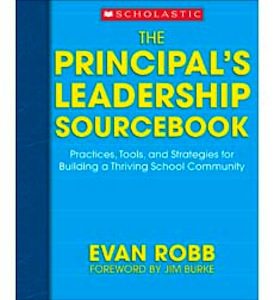
Learn more from my book The Principal’s Leadership Sourcebook, Scholastic

Loading

Colleagues, Co-Conspirators, and Creative Partners

By Steven Kellogg

         In a celebrated poem by Robert Frost called “A Tuft of Flowers,” a worker mentally sends a message to a colleague who has labored earlier that day on the same task with which the narrator is concerned, and he says: “Men work together, I told him from the heart, whether they work together or apart.”  And that’s the way we work, as librarians and teachers of reading on one hand, and authors and illustrators on the other. We are colleagues and co-conspirators who put our energies separately, but together, into the very important and exciting work of turning kids on to books, giving them a passion for their written and spoken language, and opening them up to its vast communicative and artistic range.  

        As creative partners, we depend upon each other to do our work with care and sensitivity. You rightfully expect authors and illustrators to put into your hands’ books whose words and images can be effective tools for reaching, inspiring, and moving the children in your care. Happily, that expectation is being validated by a surge of interest in literature-based reading programs throughout the country. It seems to be fueled by the growing conviction that children don’t become particularly excited about basal readers, workbooks, ditto sheets, nor do they file into libraries to check them out. They do become excited about stories and pictures that capture their imaginations. Like all of us, they are drawn to works that communicate in the language of feeling, which is the way that elusive thing called art so effectively reaches us. And the communicative power of art, as it is utilized in its varied means of creative expression (from architecture to painting to literature to drama), has been a compelling outlet for every culture and civilization since man’s beginnings.

        An increased emphasis on the role of children’s literature is a challenge to librarians and teachers as well as to their partners in publishing. Your role in our collaboration is to share the books with care, enthusiasm, creativity, and love so they have the maximum opportunity to reach their audience as effectively as possible. Although authors, illustrators, editors, art directors, designers, and printers all work together to produce a book, it’s not until the book is actually read and looked at that it really comes to life. Until that moment, it’s a darkened theater—a tableau frozen on a stage in a vacant auditorium. But when the teacher, librarian, parent, or friend opens the cover and shares the book with a child, the theater is illuminated, and, as the pages turn, the curtain rises and falls on successive acts and scenes. Through that reading and sharing the words come to life, and the illustrations move and flow with action, feeling, and vitality.

        Of course, each book must stand on its own merits and earn applause and approval from whoever experiences it. But if you bring a child and a book together with a sensitive understanding of that particular book—if you recommend and share and read the book aloud as if you were a part of its creative life—then that book has a much greater chance of being special to that child. And you will be remembered as being part of that book, and part of that gift, as surely as if your name were engraved on the jacket and the title page: a colleague, a co-conspirator, a creative partner.

        I have loved picture books since my childhood, and I recall with deep gratitude the relatives who were sensitive enough to give me books as gifts and to share both the books and themselves in magical read-aloud sessions. I had a passion for drawing as a child, and I used to make up my own tales and illustrate them for my two younger sisters, Patti and Martha, in a ritual we called “telling stories on paper.” On a rainy Saturday afternoon, or just before bed, I would sit between them with a stack of paper on my lap and a pencil in my hand, and I’d spin some kind of a bizarre yarn while scribbling illustrations to accompany the narrative, passing them first to one of the girls and then to the other. I found the process of “telling stories on paper” enormously compelling, and during those early days, before the blessings of editorial intercession were available to me, I would rattle onward with interminable enthusiasm until my dutifully attentive sisters were each buried under piles of pictures or comatose with boredom.

        My childhood fascination with illustrated storytelling persisted into young adulthood and shortly after graduating from college I began sending manuscripts with accompanying sketches to major publishing houses. When I was offered a contract to illustrate George Mendoza’s stories “The Hunter,” “The Snake,” and “The Hairy Toe” in a forty-eight-page book entitled GWOT! Horribly Funny Hairticklers, I was ecstatic.

        I had a wonderful time putting the book together, and I sent copies off to various friends, particularly those who had encouraged me to make the leap into publishing. Among these was a couple who lived in New York with their precocious but rather shy four-year-old-daughter named Helen. They were concerned that exposure to stories like “The Hunter,” “The Snake,” and “The Hairy Toe” that were assembled in a book entitles GWOT! might prove to be a traumatizing experience for her. But because I had illustrated the book and inscribed it to their Helen, they dutifully read it to her at bedtime. Several nights later, my wife and I were invited to their apartment for dinner, and in response to my knock the door swung open and there stood Helen in a ruffled party dress. For a moment she remained poised with a sweet hostess smile on her face. Suddenly, it transformed itself into a jubilant mischievous leer, and she screeched “GWOT! I Love You!” It was obvious that the book had not traumatized her in the least, and indeed her parents, to their ultimate despair had to reread the stories night after dreary night for many, many months.

         Helen and her family moved to the West Coast, but I continued to send her my books as they were published. A few years ago, the second oldest of my stepdaughters was married and Helen, now a young woman and an established television actress, flew east with her parents to attend the wedding. I had not seen her in quite a few years, and, as the deception in our backyard was nearing its end, Helen and I strolled along the edge of the woods together, and she brought me up-to-date on all that had been happening in her life. And of my books, which are still on her bedside shelf. She told me that whenever she opens them, the words and the pictures are a magic carpet to her childhood. She feels that she is once again a little girl snuggled against her parents as they read the stories aloud, and she happily loses herself in the illustrations that were once spread across their laps.

        In reflecting on Helen’s involvement with her books, I realize I had known something intuitively when beginning my career that I am convinced, thirty years later, is indeed true. Too often, I think, we define children as a bland herd, and we do not adequately recognize the complicated variety of personalities that they, as a group, represent.

        There should be made available to kids, as well as to adults, a delicious smorgasbord selection of books that deal with many facets of human experience. We should provide books that present an opportunity to explore a great range of emotions, exposing children to stories and images that inspire laughter, tears, shivery-spooky feelings, flashes of glowing, loving warmth, and insight. They should be acquainted with books that contain the creative approaches of many different authors and illustrators so that each young reader can find the ones that speak to him or her with particular clarity and poignance.

        Helen’s recollection of the way in which her parents shared books with her is also revealing. I believe that the picture book’s finest hour occurs during a read-aloud session when the book is bridging two laps and uniting the reader and the audience. The reading adult’s voice unlocks the magic of the story, inviting the child to enter the lives of the characters and to explore the landscapes that are delineated in the illustrations. There is a special warm and personal quality to the participation in that shared experience that is not duplicated while seated in front of a television set in a darkened room, and it is important for all of us who love children and books to continually express the value of reading aloud.

Check out Steven Kellogg’s website

Don’t Miss These All-time Favorites by Steven Kellogg:

The Island of the Skog

Paul Bunyon

Best Friends

The Mysterious Tadpole

Pinkerton Behave!

Jack and the Beanstalk

Loading

Questioning the Status Quo

I’ve always questioned the status quo as far back as my first year of teaching. There was an abundance of negative talk about the administration, other teachers, and how students were unprepared for learning. Most of it occurred in the faculty lounge, and I soon abandoned that room because the negative atmosphere affected me and my attempts to maintain a positive outlook. 


As a new teacher, it’s tough to be surrounded by teachers who don’t want professional development or complain about new initiatives. For me, the greatest challenge was feeling like an outsider. Negative attitudes don’t build community and make it very challenging many teachers and for the principal to build collective efficacy among staff.


Negative attitudes and unproductive teaching practices can be powerful; they can take hold of a school’s culture, spread like a virus, and affect teaching and students’ learning.  Once I became a principal, I made a commitment to work diligently to stop practices that have continued so long.  Some teachers accept them as tradition or offer rationales such as: “We’ve always done it that way here.” or It’s worked for me, it should be good enough now.” The question that begs answering is, What are these practices and how can we can we stop them?  


No doubt, they need to go. To accomplish this means raising your awareness of practices that make no sense.  It won’t happen after one try. Entrenched ideas, like those listed below, require vigilance on your part. Don’t give up. When you address them, Always. Remain. Positive. To maintain a positive stance, I’ve included a section called “Changeover” which offers suggestions for transforming negative practices in your school to positives.

Resistance to Change: Resisting change runs a wide gamut. It can be refusing to adopt research-based best practices, being unwilling to try collaborative learning, refusing to integrate technology, attending professional learning in body but not in mind and spirit. Beliefs and statements among staff enable you to spot resistance. Listen for comments such as, “This, too, shall pass,” or “It was good enough for me, it should be good enough for these students.” Some staff have feelings of entitlement: “Families love me so I can do what I want.”

Changeover: Extend invitations to teachers to participate in learning that can bring meaningful changes to teaching practices. Accepting an invitation means a teacher has made a commitment. Have those involved in change bring artifacts and lesson results to team and department meetings and share. Enthusiasm and good news can spread; give yourself and your staff the gift of time.

Unconditional Defenders: Some staff members feel that the principal needs to defend them to a parent or central office administrator even if the teacher’s actions are indefensible. When a staff member makes an egregious error, you need to take positive action. This might make you unpopular, but as you work to support the person, you can transform this attitude.

Changeover: First, take the time to listen to the staff member and those affected by his or her actions. Help the staff person understand the mistake and discuss ways to avoid repeating it. Be part of the reflective process through meaningful conversations and show staff what kind of support helps them grow and improve.

The Count Down Mentality: In many schools, at the end of the first day, you can hear staff say, “Only 179 school days left.” Some teachers even keep a countdown calendar. This creates a mindset among staff that teaching is a job, not a calling.

Changeover: First, if you hear these comments, start a conversation immediately. Make it known that everyone is at your school to help and support children’s learning and emotional wellbeing. Revisit this mindset at team and department meetings. Invite teachers to share how they have helped move a child forward and continually point out how the teachers sharing illustrates why we come to work each day.

Too Much Tolerance: Beware of condoning unprofessional behaviors among staff and central office administrators in order to cultivate an alliance. If doing this is against your beliefs and values, then you will confuse staff because they won’t know what you truly stand for and value. Moreover, if your words and actions change with each situation, you give staff the license to do the same.

Changeover:  Take a deep look at yourself and have an in-the-head, reflective conversation. Make sure you understand what you believe and value as a principal and avoid compromising these beliefs. Always keep in mind why you are a principal—to advocate for and support children and their teachers.

Unprofessional Dress: If your school has a dress code for staff and students, then both groups need to follow it. A teacher not following the dress code will have difficulty discussing a breach of dress code with a student. Also, staff should care how they present themselves to students and colleagues.

Changeover:  Find out why a staff member continually ignores the school’s dress code. Set aside time to meet and have conversations about this.  Help the person see how his actions affect the morale of other staff members and students. Then, make it clear that part of the job is abiding by the dress code with a goal to look professionally appropriate for students and staff.

Excuses, Excuses: Some staff always have a reason for being late to bus or recess duty, or for not standing in the hall when classes change. This outlook can prevent staff from embracing a growth mindset as they rationalize their decisions, attitudes, and behaviors.

Changeover: Keep a list of excuses made and then discuss the list with the teacher. Help him or her understand how not appearing or being tardy for school duty, affects the entire school community. For change to occur, you will have to help a person understand the whys.

Closing Thoughts

The practices I’ve discussed need to stop because each one hurts students and your school community. My challenge to you is to be part of the solution by taking the time to have meaningful, honest, and supportive conversations with staff to help them understand why a practice, behavior, or words aren’t acceptable.  Your students, teachers, and school community deserve it.

Check out our podcast on things that need to go in education!

Check out my book, The Principal’s Leadership Sourcebook

Loading