Tag: The Robb Review

Surefire Tips for Maximizing Reading Stamina

I have just invited eighth grade students to select books and find comfortable places to read them.  During the first ten minutes, Adam does everything in his power to avoid my request. He goes to the bathroom, gets water from the fountain in the hall twice, sharpens a pencil, considers three books, chooses none, and instead, hastily leafs through a magazine. Clearly, Adam has a lot of energy.  He also has the ability to concentrate while playing sports and talking to friends.  But invite Adam to read, and he becomes exhausted after ten minutes, often complaining that his eyes and head hurt.  These are all common symptoms of students who lack the stamina to read for extended periods of time.

Reading stamina is having the energy and the concentration to focus on reading for at least thirty continuous minutes a day.  For students who lack stamina, reading is a frustrating and unpleasant experience, so they tend to read as little as possible.  However, today, reading is a life skill needed for college and career success, as well as for the joy that a personal reading life brings. The good news is that you can help students boost their reading stamina at school and at home by using the ten tips that follow.

Have students start small.  Have them gradually build stamina by reading self-selected books in five-minute intervals–then ten minutes, and so on, until they reach one hour.  Remind students that developing reading stamina is like training to run a mile in less than ten minutes.  Both require regular practice to increase energy and concentration.

The Surefire Tips for Maximizing Reading Stamina

  1. Value Independent Reading. At school, this means setting aside twenty minutes at least three times a week for students to read self-selected books.  Teach students how to choose books that they can read with ease by showing them the two- finger method. Students read a page in a text.  If they encounter more than two words they can’t pronounce or whose meaning they can’t figure out from context, they save the book for another time and choose a different one.  Teaching students to choose books that are accessible and enjoyable will also motivate them to read at home.
  2. Use Classroom and School Libraries. Students of all ages need access to books. Seventh-grader, Lucas, put it this way, “ Having a classroom library means I can find a book when I need one right away.”  Continually work on enlarging your classroom library: Aim for 1,000 to 2,000 books at a variety of levels, on a range of topics, and in multiple genres.

Schedule a weekly school library visit for your students—and be sure to accompany them so you and your librarian can suggest great reads.  If your classroom library is still a work-in-progress, encourage students to check out several books whenever they visit the school library and store them in their class cubbies or lockers, so they have enough to read until their next library visit.

  1. Read Self-Selected Books. Educators such as Donalyn Miller, Richard Allington, and Steve Krashen agree that choosing their own books is the key for students to become motivated to read at home and in school.
  2. Diminish Distractions. Reading is social.  There will be times that a student wants to share something he or she just read which is terrific because it shows engagement with the text.  But it can also be distracting to classmates.  So encourage students to use a soft voice while sharing with a classmate.  Keep the door to your room closed to diminish noise from the hallway.  The fewer distractions, the easier it will be for students to concentrate.
  3. Create Comfortable Reading Spaces. Think about the places at home where you read.  Most likely it’s in a comfortable chair, on an oversized pillow, or in bed.  Visit a carpet store and ask the owner to donate small remnants that students can sit on while reading.  Carpet remnants are easy to store; they can be stacked in a corner or closet.  Avoid requiring students to read for pleasure sitting at their desks.  Instead, invite them to find a comfortable space in the classroom.  Some will sit under desks or lean against the wall. If you have a limited number of beanbag chairs and large pillows, create a rotation system so students take turns reading on them.
  4. Advertise Great Reads.  Students respect and value suggestions from peers.  So set up systems that foster sharing book suggestions. Here are three:
  • Teach students to book talk and have them present a talk each month.  The benefit of consistent book talking is huge! Over ten months, a class of twenty five students will hear about 250 books from peers.
  • Set up a graffiti wall by posting a large piece of construction paper on a bulletin board.  After completing a book that they enjoyed, have students write the title and author on the graffiti wall and one sentence explaining why they enjoyed the book so much.  Then, a few times a week give students several minutes to browse the graffiti wall to discover peer-recommended books.
  • Teach students to give a 60 second elevator talk about a book they enjoyed reading.  Their goal is to convince peers to read it.  When a student’s desire to present an elevator talk strikes, schedule it during that class or as soon as possible.
  • Set Monthly Goals. Share with students the research findings by Donalyn Miller and Steve Krashen–that reading 40 books a year independently can ramp up their reading achievement by enlarging their vocabularies and expanding their knowledge base. Negotiate monthly reading goals with students to help them meet the 40-book challenge. Books of 500 or more pages should count as two to three books. Students who can read books of that length presumably have stamina, and you want to encourage them to continue reading long and complex texts.
  1. Take Brain Breaks.  A seventh grade class lobbied their teacher for “brain breaks”– time to chat and stretch after they had been reading deeply for thirty minutes.  Brain breaks offer students a few minutes of down time to relax, re-energize, and yes, gain stamina.  Tell students that when they plan to read at home for an hour or more, they should take a break, walk around, have a snack, and then return to reading.
  2. Hold Small-Group Discussions.  Organize into small groups students who have completed different books that are in the same genre. Students discuss such things as literary elements in fiction or text features and structures in informational materials. As such, they not only expose their peers to a range of reading materials within a genre, but they also tend to become better at clarifying their thoughts and become more reflective when they share their thinking.
  3. Have Students Self-Evaluate. Four times throughout the year ask students to review their reading logs and reflect on the number of books they completed, favorites books, books they reread, and the amount of reading they completed at home.  Then, ask students to use their self-evaluations to set reasonable independent reading goals which might include: extend reading time at home by fifteen minutes, read longer books, try a different genre, add a book to the graffiti wall, or read other books by a favorite author.

You can also give students a checklist to measure their reading stamina as part of their self-evaluation.

My Reading Stamina Checklist

Name_______________________________Date___________________

Checklist for Evaluating Reading Stamina: check items that apply to your reading.

____I quickly found a comfortable space to read.

____I concentrated on my reading and met my goal of _____minutes.

____I read for_____minutes beyond my goal.

____I can read and concentrated for all of silent reading time.

____I read without jumping up, getting a drink, or moving around the room.

____If I was distracted, I worked hard to avoid distracting others.

____I recognized I was distracted and was able to return to my reading on my own.

____I have a reading stamina goal and use it to increase the amount of time I read deeply at school and at home. [end checklist]

Final Thoughts

Showing students how to self-select “just right’ books is a giant step toward improving students’ reading stamina. Choice creates engagement and engagement nurtures students’ desire to read.  As they improve their stamina, commend students. Celebrate small but consistent improvement as well as big improvement.  Keep in mind that all students will not improve their reading stamina at the same rate.  In fact, some students might need more than one school year to be able to read for long periods of time. That’s okay. Coordinate your efforts with other teachers, celebrate progress, and give students the gift of time.

Learn more about Laura’s ideas on reading- check out- Teaching Reading in Middle School

Loading

Reach Every Reader!

By: Laura Robb

“Comprehension” is a word that teachers use all the time: Jake’s comprehension is weak; Talia can’t comprehend nonfiction; David comprehends everything he reads.  Comprehension refers to what readers understand in a text while comprehending is the process readers use to develop comprehension.  It’s helpful to confer with students to discover their comprehending process and feelings toward reading.  Analyzing students’ writing about reading also provides teachers with a window into students’ thinking and level of understanding.

        There are many levels to assessing students’ understanding of a text.  Proficient and advanced readers automatically do the following while reading.

  •      Interact with the text by conversing with the author: raising questions, predicting, and commenting.
  •      Connect parts of the text to their experiences and background knowledge.
  •      Connect information and narrative elements within a text.
  •      Use context clues to figure out the meaning of difficult words.
  •      Transfer what they learned and understood to other learning situations.

Recall of Information

A common sense belief I always share with teachers is that it’s pointless to ask students to read and reread a text at their frustration level.  Recall implies that the learner is able to decode the text, understand, and then remember the information. That will happen when the student has enough background knowledge and the text is close to his or her instructional reading level.  Valentina’s story illustrates how frustration reading affects students.

Conferring: A Snapshot of Valentina

Before administering an Informal Reading Inventory (IRI) to Valentina, a sixth grader, we spent time chatting about her interests.  Valentina loved playing basketball, texting friends, and hanging out with them.  When I asked her how she felt about reading, she volunteered this statement: “I hate reading. I suck at it.” Her reasons were candid, logical, and on point.  Reading three years below grade level, her ELA and content teachers required Valentina to read and reread grade-level texts.  Her words reveal her feelings about these tasks: “If I have to read again and again and can’t understand it, what’s the point?” She shrugged and added, “ They [her teachers] get mad when I write nothing about reading. I can’t write if I get nothing [from the reading].”

After completing and analyzing Valentina’s IRI, I suggested two actions that could improve her reading:

  1. Have her read and learn from material at her instructional reading level—preferably books she chose.  Then involve her in meaningful book discussions with a partner or small group who discuss questions they compose.
  2.  Accelerate her reading stamina and achievement by teaching her how to self-select books for independent reading because often students like Valentina select difficult books to save face with peers.

Volume Matters

Researchers agree that volume in reading matters.  First, volume can develop a student’s personal reading life which means he or she chooses to read at home.  In addition, volume can enlarge a student’s vocabulary and background knowledge, build fluency, and develop a deep and lasting love of reading.

There are school districts that require students read grade-level texts even if they can’t comprehend them.  Often these students listen to a book on tape or the teacher reads the book aloud to the class.  The problem here is that students aren’t reading and that’s why they slide backward.  Continuing on this trajectory will not support the Valentina’s of this world and will increase the number of students who don’t read and dislike reading.

Reflecting on Valentina’s Story

Fortunately for Valentina, her ELA teacher, received permission from the principal to abandon the district requirement of every student in a grade level, complex text.  Valentina could choose from alternate books her teacher suggested for each unit of study.  She began to self-select books for independent reading and read them.  In the past, Valentina was an ace at fake reading during free choice independent reading time.  Adjustments in her ELA class are definitely a positive step toward supporting Valentina’s reading life, but many questions remain:

  •      Would her content teachers find materials she could read and learn from?
  •      Were enlarging classroom libraries a top priority?
  •      What kind of feedback did Valentina receive from her teachers to increase her efficacy and self-confidence?
  •      How often did teachers confer with students like Valentina to continue to monitor, support, and celebrate her progress?
  •      What kinds of direct instruction in all classes did Valentina (and other students) need to practice and internalize what good readers do?

Closing Thoughts

We all want our students to love reading.  Alas, roadblocks such as limited or no class libraries and a lack of alternative texts and materials for striving readers derail our wants. Yes, it’s heartening to observe ELA teachers and school administrators adjust instruction.  However, until teachers in all subjects have access to books and materials that meet the instructional needs of their students, progress will remain slow.  We need to bring common sense back to our teaching practices and ensure that we reach every reader in our classrooms and support them on their journey to developing a personal reading life.

Check out Laura’s website!

Follow Laura on Twitter @LRobbTeacher

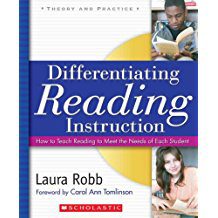
We recommend Differentiating Reading Instruction by Laura!

reading


Loading

It’s Hard To Burnout If You Have Never Been On Fire

Evan Robb


It’s better to burn out than to fade away- Neil Young

Leader

I have always been fond of Neil Young’s quote.  I have never had any interest in fading away and by seeking out this blog, you probably feel the same.  Burnout is an overused expression in our field and often an excuse for less than stellar work.  There is an old saying that speaks truth:  It’s hard to burn out if you have never been on fire.

Students deserve our best.  In this post, I am going to rant a little about a few peeves I have with people who seem to constantly be burnt out, and I’ll wrap it up with some ideas on how to turn some negative behaviors around.

Recently I went on a cruise.  Yes, I had a great time. However, one aspect I noticed was how upbeat and energetic all the crew members were, even though they all were far from home, worked very long days, and most were not highly paid.  The crew was professional: well dressed, mannerly, and customer focused.  As Laura, my wife, and I left the boat we wondered why some staff in schools are so different.  It is not easy to answer, but I believe the answer is found in the culture of the school and what the leader is willing to tolerate.

  • Have you ever had a staff member come up to you or be in your presence to announce 179 days left after the first day of school?
  • Or, do you have a staff member who always states how many days until Friday?
  • What about your perpetually tired staff member whose lack of energy is freely communicated?  You know, the person who says, “I’m so tired” when you ask them how their day is going.
  • Finally, the person who gripes how cold it is during winter and then complains about the heat in late spring.

Here are a few tips you can use to bring passion to those who have rarely been on fire.

  • Tell them to stop.  Yes, this is blunt. But a school will never become a great place for all students if some staff are allowed to wallow in their personal misery.  I actually had a staff member years ago who made the 179 days left claim;  I told the staff member to stop and never to reference the countdown in front of me.  This was an awkward encounter, but my point was heard and it stopped.
  • Always be positive!  The principal sets the tone.  It is a mistake to join into T.G.I.F conversations.  If you join in, staff assumes permission has been given to speak this way.
  • Set the tone for your school, model the behaviors you want to see.
  • Do not let yourself go down the rabbit hole called negativity.  It is always present and there are always people in the hole who will be happy to see you there. Misery loves company.
  • Never hire a person who appears burnt out in an interview.  How a person presents himself or herself in an interview is the best you’re gonna get!

Students deserve the best!  Join me and take a stand to bring energy and positivity to your school.  Do not tolerate negative people.  Negative people hurt the culture of your school and negative people harm students.  Recognize and support the many positive people on your team.  And realize your positive staff has long known who the negative staff members are, most will appreciate you helping those staff find some passion and energy for the work they do!


Let this phrase guide you:  What the leader permits communicates to others what the leader will tolerate.  Every day people ask me how I am doing, and everyone who asks gets a big smile from me and hears, “I’m doing great!”  Students and staff deserve my best. Join me!

Follow me on Facebook! 

Let’s connect on Linkedin

Check out my book, The Principal’s Leadership Sourcebook, Scholastic

Also, Laura and I have a podcast channel, The Robb Review Podcast!

Loading

The Shadow Children

By Laura Robb

“I didn’t guess!” Sofia tells me.  I got it [says the word.]– incredible.”

“Tell me what you did,“ I reply.

“I looked through [the word]. And then I saw I could say in and ible and the e was short—cred. I put it all together.“

“You used the strategy of looking through a long word to find parts like prefixes and suffixes that you could say! Well done. All the practicing you did really helped!”

“Yeah!.”

        Sofia, a fifth grader, has difficulty decoding multi-syllable words.  Her recall of text details is good, even when she misreads several words or when she listens to her teacher read aloud.  The above conversation reveals progress, but never feel discouraged if students return to the old guessing habit.  Progress is never neatly linear.  It’s a messy back and forth.

Sofia entered fifth grade reading at a mid-first grade instructional level.  She could not distinguish short from long vowels, nor could she say the vowel sound when confronted with a word she couldn’t pronounce.  She had little knowledge of consonant blends and digraphs.  Her decoding skills were tentative, and Sofia’s main strategy was guessing.  Sofia isn’t alone.  Large numbers of students throughout our country live in the shadows, always on the periphery of learning in their classes.


Perhaps, students like Sofia fall through cracks in a school system because teachers, feeling the pressure of high stakes tests, focus their attention and interventions on students who, with support, can pass the state test in reading.  In the shadows they lose confidence, don’t know how to choose books they can read.  Sadly, they continue to slide backwards because they don’t read enough to improve nor do they receive appropriate interventions. Researchers agree that low reading volume combined with weak word knowledge results in minimal annual progress.  Often, the small voice in these students’ heads is, I can’t do this, and gradually, as years pass, the drive to work hard to succeed diminishes, self-efficacy vanishes, and students mark time until they can drop out.

What Sofia Can Teach Us

Sofia’s decoding tank of tools was almost on empty.  What frustrated her was the huge gap between her ability to think with text and her ability to read text.  To build her knowledge of how our language works, she completed word sorts from Words Their Way letter-name book.  Working first with short vowels and moving to long-vowel patterns, I discovered that each sort made sense to Sofia, and she was able to complete a sort with automaticity by the end of the week.  However, two things became apparent:


  •      recalling different word patterns in text remained difficult because Sofia would forget the patterns and short and long vowel sounds still confused her; and
  •      applying word knowledge to continuous text wasn’t happening during the first three months of learning with her and others in the group, as there was no transfer from word sorts to text.

Sofia and others like her have had diverse phonics experiences in elementary school.  However, they never absorbed the presented information to a level enabling them to apply it automatically to continuous text.  The mantra of, “Well, they were taught it last year and they should know it,” is unproductive and blames the students.

When students don’t get a lesson, it’s teachers’ responsibility to find ways to re-teach and build lasting understanding.  That’s what being a teacher means.  Marie Clay so wisely explained that students receive and understand lessons differently.  Knowing this, interventions should be an integral part of every core curriculum class.  Undoing poor habits and building students’ self-confidence is more difficult the longer they stay in the shadows.

Solving Decoding Challenges

Sofia and others in her group continue to grapple with developing analogous thinking—the ability to transfer knowledge of a word pattern to an unfamiliar word with the same pattern.  Students often complete sorts that I create based on what I observe when they read aloud to me.  Hearing students read aloud one-on-one is an opportunity to learn about their process and to support them with questions that prevent them from guessing or skipping words.  The goal is for them to use their knowledge of word patterns and the text’s meaning automatically.  Here are some prompts/questions to try:

  •      If the word has a prefix, say it.  If the word has a suffix say it. Look at the word that’s left and say it.  Now put it together.
  •      Can you figure out if the vowel is long or short?  It’s interesting that students could parrot the long vowels: a, e, i, o, u, and sometimes y.  But confronted with a word like stripes, they couldn’t say the long i and substituted other vowel sounds.  No internalization of these sounds had occurred.
  •      Sometimes, skipping the word and reading to the end of the sentence, then going back, rereading the entire sentence and trying to say the word helped.  For example, one student stumbled and stopped on the word diapers.  She quickly figured it out using this strategy because the end of the sentence noted that they were often wet and dirty.


If students don’t “get it” quickly, tell them the pronunciation in order to prevent guessing and a long a pause in the reading.  Make note of the word and work on challenges you observed by creating individualized word sorts that give additional practice opportunities.  It’s important to remember that when five to six years have gone by, it’s not possible to have a quick reversal, even with an extra daily class that includes daily interactive read alouds, choosing and practicing reading a poem a week for fluency, and guided and self-selected independent reading.

Time and Place Matter

When you work with a student one-on-one in order to provide reading feedback and support, find a separate place where your conversation and the student’s reading aloud are private. Self-confidence and self-efficacy are huge issues for students with reading challenges like Sofia’s.  It’s crucial to continually point out every increment of progress and build the YET mindset of “I think I can with hard work and support.”  Help them feel safe and provide beautifully written and illustrated books for reading.

Some Closing Thoughts

Believe me, it’s tough to be patient when you’re working thoughtfully, carefully, diligently, and progress, at times, seems minimal at best.  Avoid blaming yourself, other teachers, and the children. Instead, DON’T GIVE UP. There’s no recipe or program to fix things.  Your vigilance, observations, questions, and dogged determination to find ways to intervene—ways that move the children forward—will eventually bring about the changes you hope and pray for.


Know, too, that it’s difficult to engage and motivate the Sofia’s in our classrooms.  They come with greatly diminished self-confidence, a lack of automaticity with reading, a lack of fluency, a lack of word knowledge, and little practice reading real books.  However, as you support and help them read wonderful books, discuss them, plan interventions to increase reading skill, and provide books for self-selected independent reading, progress will surely come.  It might not happen the year you learn with them, but with the kind of support that monitors reading behaviors and uses what’s observed to plan interventions, I have to believe it will come.

Check out Laura’s Website!

Our Professional Development Site, Robb Communications

Follow Laura of Twitter @LRobbTeacher


Loading