Author: Evan Robb

You Can’t “Fire” Your Way To Excellence
Evan Robb


Over time, I have learned neither the school principal nor any other administrative “leader,” can fire staff as a pathway to their personal excellence.  Effective principals understand it takes time for a teacher to grow and develop the skills necessary to integrate best practices into a student-centered environment.  Effective principals understand that at times, a variety of supports can improve teachers’ practice and class management.  It’s important to understand this: a principal cannot build a positive student-focused culture by removing staff in hopes of the perfect teacher showing up for an interview.


A point before reading further:  I want to make it clear–there are times when a teacher should not be offered a contract.  However, these kinds of decisions should be few and far between and put into action only after considerable intervention and support.  


The principal either helps staff grow or not.  A commitment to helping staff grow is the best path to teacher improvement.  Every school has some rock star teachers, and every school has some staff who struggle.  An effective school has layers of support, and it’s my belief that every school should have key elements in place to provide support for staff who struggle.


What is the quickest way to improve a school?  Hire the best and most highly skilled teachers for every classroom.  But this is not possible.  Hiring is competitive, and the best in any profession have more choices than others.  There are two choices for the principal who wants to improve a school: believe the falsehood of firing to achieve excellence or commit to making your staff better.  Effective principals value all school community members and dedicate themselves to improving teachers’ skill. Providing support teachers require to improve their practice takes time, energy, communication, and a commitment to growth.  That’s why schools leadership is hard work.


There is no fast track to help principals shift to a more supportive culture.  However, change can happen when the principal is committed to a healthy, positive culture for the school.  Schools, where teachers feel supported to grow and improve, have some commonalities.  Does your school have my top five?


  1. Hire the Right Staff:  When positions are open, effective principals set up interview committees with several teacher leaders who collectively know the skills the teacher needs and what person is the best for the school.  Effective principals are patient and do not mind doing many interviews to find the best candidate.  The best principals know experience does not necessarily equal a great teacher.  Talent will always make a difference and can be more valuable than experience.  Opening the hiring process to groups of teachers can support a school’s culture and prevent the challenges a poor hire brings.
  2. Formalized Mentor Program:  New staff need support.  Effective schools have well planned and coordinated mentor programs for teachers.  Effective principals make sure all new staff have a mentor in their school who will be supportive and great role model for the new staff member.
  3. Professional Development:  Effective principals work with their staff to plan ongoing professional development based on the needs of the building.  As I have stated in other posts, one and done professional development does not work.
  4. A Student-Focused Culture:  Effective principals know the impact of a positive culture focused on students.  A positive, student-centered culture makes a difference and is always lead by the principal.  Schools with positive cultures have positive principals.  The opposite is equally true–a principal can create a negative environment.  Often, this occurs when the principal blames other factors for the negative environment instead of looking in the mirror and reflecting on his or her words and actions.
  5. Competitive Wages and Benefits:  Yes, I said it.  This is whispered by many but not often stated.  People who teach need wages and benefits they can live on, and they must be competitive with surrounding districts.  Effective principals know if salaries are not competitive they will face challenges to retain staff and they will have a hard time attracting the best staff.  


Helping others grow is part of leadership.  Every school leader was once a new teacher. A new teacher with hopes, dreams, and challenges.  Always remember someone took a chance on you, and some or hopefully many helped develop you into the person you are today.  Extend the same support to those who struggle. Always keep in mind, whether spoken or seen on T.V. news, you cannot “fire” your way to excellence.

Follow Evan on Twitter @ERobbPrincipal

Check out Evan’s blogs on the Scholastic EDU webpage!

Bring Laura and Evan to your school division! Our website is Robb Communications

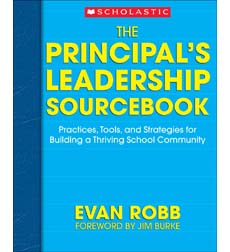
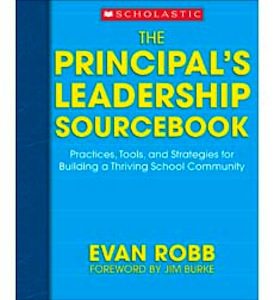
For additional ideas, check out Evan’s Book!
principal

Loading

One-Shot PD or Ongoing PD?

Logo

Many years ago my principal asked me to attend a conference and then train staff at our school. I tried to learn more about what training the staff meant. Was this a common practice? It seemed intimidating to me. The train the trainer model, taken from the business world, was becoming a popular term in education. It did not work for me.


Yes, I attended the conference, had a good time, and learned some. What was not good for me? The faculty meeting I had to lead a month later where I was to “train” the staff on what I learned.  A horrible experience.  I was not confident in the new information I learned while attending the conference and less confident to train a faculty where most were more experienced than me. Does your school or Division sing the praise of “train the trainer” models?  I hope not.  I have rarely seen them work.  Many times staff can be great in front of 25 students but not comfortable at all in front of peers who they need to teach.  I propose a new method, well not exactly new, I propose ongoing professional development.  Professional development meeting the needs of the school, occurring at the school, and for all staff in the school.


There are two ways to start ongoing professional development in a school: hiring a paid consultant or a school-wide book/professional study.  I will address both in two posts. In this post, I will give tips for using a paid consultant.


Assuming your school has access to professional support, the first step is to figure out what your faculty needs.  This can be accomplished through conversation, data analysis, and observation.  Pick one focus area all staff can benefit from in all disciplines.  As an example, in my school, our year-long focus is differentiating instruction.


Tips for successful year-long professional development:

  • Know what you want to focus on and work with staff to build a commitment.
  • Secure an educator who can meet with your staff at least six times during the school year. Add the dates and times to your staff calendar, so staff knows when each session is over the course of the year.  I like to focus on professional development days or use time in the place of regular faculty meetings.
  • Along with several staff members, meet with the presenter to grid out what topics will be addressed during each session.  Know what the outcome should be at the end of all sessions and communicate this to staff throughout the year.
  • I am a stickler that a consultant will let staff know at the start of the session what they will learn.  Also, there must be collaborative opportunities during the sessions, and a task staff will try in preparation for the next meeting.
  • It is critical for the principal and other administrators to be part of all sessions.  In my school all teaching staff, guidance staff, and administrators attend.


When reading this, you might think, O.K. it’s great, but it could be expensive. My counter, it is not if you cut back on sending staff to conferences and trainings.  It is not costly if you consider the gain of all staff in your school receiving training instead of a few, or replacing “train the trainer” models which I do not feel are very successful. Bring on-going professional development to your school it is the best way to generate excitement and energy for a full year.  It is a positive and significant shift away from the one and done sessions and the false expectations that this method can bring change to a school.  You want positive change to impact students and staff.  Choose a school focus that is inclusive and work on it all year long through purposeful professional development.

Read more of my blogs on ScholasticEDU

Scholastic

Check out my book, The Principal’s Leadership Sourcebook, By Evan Robb, Scholastic

Evan Robb's Book

Loading

A Tale of Two Classrooms

Evan Robb

Sometimes I have challenges getting people to agree.  I have never had a problem finding agreement when it comes to what students deserve.  Every educator I have ever known would agree that students deserve the best we can give them. But is our best always the best for students?  


Technology and more opportunities for educators to learn about best practice are exciting, but at times they can cause principals new leadership challenges.  Challenges such as managing change, and the disparity between staff who embrace change and those who do not.


This brings me to the topic of my post.  The gulf that can exist between staff who embrace professional development and technology integration to those who resist can be profound.  Gaps in professional learning can result in very dissimilar classrooms–those that are student-centered and use technology to enhance learning, and those that continue with lectures, completing worksheets, and copying notes from the board. Teachers might think they are providing the best for students because what they are doing served them well, but unfortunately, the ways they learned are not appropriate for students in the 21st century.


I worked in schools years ago where many esteemed staff members taught in a traditional manner.  Back then, schools were just beginning to integrate technology into classrooms. My school spent a year trying to learn how to use email.  Of course, many staff would proudly mumble, “This too shall pass.”  It did not.  I would ask staff to try new methods; they resisted.  At times some would communicate they could not change because I didn’t send them to conferences.  Today, we live in a world where anyone can seek out information on their own and take charge of their learning if they are motivated to do so.  The web and social media provide unimagined opportunities to learn and connect.


The methods and practice of many teachers who were iconic in the past have become obsolete today. Teach like those who taught you, and you might become an anachronism, totally out of touch with the digital natives in your class.  If we principals believe in teaching students for their future, then we must not overtly or tacitly approve of teaching methods which don’t involve, engage and motivate students to learn.  


Growth can no longer be invitational.  Invitational growth creates a bimodal staff.  When educators lead by offering invitational growth, those who are excited seek out opportunities to grow pedagogically and to use technology to transform. Those who choose not to partake fall further behind.  If your leadership style is invitational, you give some permission not to change and grow which is not fair to students.


In some schools staff lecture, students copy notes from a board, and take tests every Friday based on recall of facts.  Often, staff in these schools receive great evaluations. In all schools, educators earn more money each year even though what they do might harm kids.  Some believe it was good enough for me, some staff are community icons, and some leaders compromise to protect their job. Kids lose and deserve much more from teachers and administrators.  Clinging to what worked in the past is unfair to students learning in the present.


Often, in the same schools are staff who are actively learning and creating personalized learning opportunities for students, differentiating, and using projects to build on the skills we have called 21st- century skills for several decades: collaboration, communication, critical thinking, choice, and creativity  As leaders, we have two difficult questions to ponder: What does it say about us if we perpetuate bad teaching?  Who is most harmed by bad teaching? I’ll answer that one; it is always kids who come from the most disadvantaged backgrounds. Kids who rarely have advocates to make sure they are learning and moving forward.


The ability for a motivated educator to learn is greater now than ever before. Leaders who are willing to make growth and learning invitational are hurting kids.  On the other hand, leaders who communicate and cultivate a learning organization will be best positioned for change.  Staff who are committed to learning don’t opt out of growth. The time to change is now. Do it!

Check out The Robb Review Podcast for more thoughts and opinions on education!

A Tale of Two Classrooms


Also, my book- The Principal’s Leadership Sourcebook, Scholastic


A Tale of Two Classrooms

Loading

Educators, Disrupt the Status Quo

I really must have messed up during the spring when I was in 8th grade. I can recall my teacher drawing a circle on the blackboard and telling me to put my nose in the circle and to stand in the same place for ten minutes. Also, I have vivid memories of the school administrator giving me a small shovel and making me dig up dandelions for a half an hour as a punishment to a long forgotten mistake I made. Unbeknownst to me, I was experiencing consequences that were probably used over and over again, for no real reason other than it’s the way we do things.

Do things such as what I recall still happen? They very well may. My journey into administration gave me opportunities to see and help to change some practices carried out for no real reason, practices not good for students. As leaders, teachers or administrators, we need to have honest conversations to bring about positive change.

Many of the practices I am highlighting you, and I both experienced when we were in school. Some may even bring back fond memories, but this does not mean they are good for today’s students. “Disrupt the Status Quo” is my exploration of some classroom practices educators need to explore further and change.

How we grade: Grading is a challenging conversation to have. Fortunately, there is much research on best practice and how grading can inform what a student knows in comparison to the curriculum. My experience is few teachers come out of school with a deep understanding of best grading practices. To be honest, for me, when I was a teacher I graded based off my recollections on how my favorite teachers graded me. In some instances this was fine, others not so much. Use of zero’s, averaging, point systems, failure, punishment using grades are a few quick topics that come to the mind. These and other grading topics should be discussed and compared to best educational practices.

Extra Credit: Bringing a box of tissues to class is a nice thing to do, counting it as a test grade will create an inaccuracy about a student’s knowledge of the curriculum. Grades should reflect what students have mastered; they should not be influenced by extra credit. Most readers grew up with extra credit, and many parents will ask for ways to earn extra credit. But this does not mean extra credit should continue.

Notebook checks for grades: Do students need to learn how to organize for class and school? Absolutely! Notebook checks can be valuable, but they don’t need to be graded– and that’s okay. Everything a teacher assesses does not need to be recorded in a grade book. An organized notebook communicates very little about a student’s knowledge of the curriculum.

Changeover: Grading, extra credit, notebook checks are all great topics for faculty study groups. Book studies, article sharing, coupled with courageous conversations in person or online can lead to effective change. An open mind and a willingness to do what is best for students–these are the prerequisites needed to start a process towards change.

Planning is needed for teachers to do great work with their students. I am sure all readers would agree with that simple statement. However, sometimes planning can go in the wrong direction, a direction we need to question.

Two types of planning come to my mind when I question the status quo.

No planning at all: Throughout my career, I have encountered a few educators who did not plan at all; they winged it. I am sure no person can be an effective teacher if they wing it. Kids deserve better. Does this exist in your school? Is it being addressed or is it allowed?

Teachers who plan for every day a year in advance: Great teachers plan and have larger outlines of where their curriculum is going over the course of the year. But each class is different. Well designed formative assessment can serve as an indicator of which groups can move forward and which groups need reteaching. Such assessment, coupled with other types of feedback, help a teacher plan. Planning each day for the entire year makes no sense; it negates and rejects the value of using student learning to guide the planning of the teacher. This type of rigidity can be harmful and often allows a staff member to say, “ I taught it; they didn’t learn it.” Great teachers can say they taught it and provide evidence to show whether students learned it.

Changeover: Empower staff to have conversations about how they plan and assist staff to create a professional standard for what effective planning is and equally important, what it is not.

Closing Thoughts:
Sometimes we continue methods that are harmful. The punishments I received in school were harmful. Anything harmful to students should stop immediately. But some, as I have reviewed in this post may not appear that harmful, but they still need to change. Take an honest look at practices and disrupt them. Work as a team, ask hard questions, and make adjustments for the best interest of students. Be willing to let go.

Check out some of my other articles on reading at Edu@Scholastic

Or, my book, The Principal’s Leadership Sourcebook, Scholastic- Evan Robb

Loading