Author: Evan Robb

It’s Hard To Burnout If You Have Never Been On Fire

Evan Robb


It’s better to burn out than to fade away- Neil Young

Leader

I have always been fond of Neil Young’s quote.  I have never had any interest in fading away and by seeking out this blog, you probably feel the same.  Burnout is an overused expression in our field and often an excuse for less than stellar work.  There is an old saying that speaks truth:  It’s hard to burn out if you have never been on fire.

Students deserve our best.  In this post, I am going to rant a little about a few peeves I have with people who seem to constantly be burnt out, and I’ll wrap it up with some ideas on how to turn some negative behaviors around.

Recently I went on a cruise.  Yes, I had a great time. However, one aspect I noticed was how upbeat and energetic all the crew members were, even though they all were far from home, worked very long days, and most were not highly paid.  The crew was professional: well dressed, mannerly, and customer focused.  As Laura, my wife, and I left the boat we wondered why some staff in schools are so different.  It is not easy to answer, but I believe the answer is found in the culture of the school and what the leader is willing to tolerate.

  • Have you ever had a staff member come up to you or be in your presence to announce 179 days left after the first day of school?
  • Or, do you have a staff member who always states how many days until Friday?
  • What about your perpetually tired staff member whose lack of energy is freely communicated?  You know, the person who says, “I’m so tired” when you ask them how their day is going.
  • Finally, the person who gripes how cold it is during winter and then complains about the heat in late spring.

Here are a few tips you can use to bring passion to those who have rarely been on fire.

  • Tell them to stop.  Yes, this is blunt. But a school will never become a great place for all students if some staff are allowed to wallow in their personal misery.  I actually had a staff member years ago who made the 179 days left claim;  I told the staff member to stop and never to reference the countdown in front of me.  This was an awkward encounter, but my point was heard and it stopped.
  • Always be positive!  The principal sets the tone.  It is a mistake to join into T.G.I.F conversations.  If you join in, staff assumes permission has been given to speak this way.
  • Set the tone for your school, model the behaviors you want to see.
  • Do not let yourself go down the rabbit hole called negativity.  It is always present and there are always people in the hole who will be happy to see you there. Misery loves company.
  • Never hire a person who appears burnt out in an interview.  How a person presents himself or herself in an interview is the best you’re gonna get!

Students deserve the best!  Join me and take a stand to bring energy and positivity to your school.  Do not tolerate negative people.  Negative people hurt the culture of your school and negative people harm students.  Recognize and support the many positive people on your team.  And realize your positive staff has long known who the negative staff members are, most will appreciate you helping those staff find some passion and energy for the work they do!


Let this phrase guide you:  What the leader permits communicates to others what the leader will tolerate.  Every day people ask me how I am doing, and everyone who asks gets a big smile from me and hears, “I’m doing great!”  Students and staff deserve my best. Join me!

Follow me on Facebook! 

Let’s connect on Linkedin

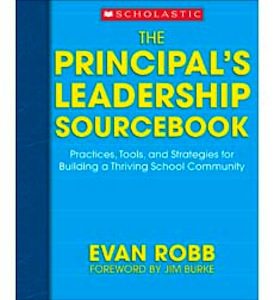
Check out my book, The Principal’s Leadership Sourcebook, Scholastic

Also, Laura and I have a podcast channel, The Robb Review Podcast!

Loading

Leading Schools in Disruptive Times: How to Survive Hyper-Change

New Albany HS Principal, NASSP Digital Principal, co-author, speaker, teacher, learner. Dwight Carter visits The Robb Review!

You would be hard pressed to talk to a teacher, secretary, or school administrator who would say we are not experiencing some disruptive times in education.

Leader

Since 2008, public perception of educators, in general, has been less than favorable. Expectations have increased exponentially, yet funding education initiatives have not grown at the same pace. One might say we face one disruption after another, yet we continue to find ways to meet the needs of our students, engage parents, respond to community desires, and do what is best for all stakeholders.


I recently co-authored a book with my mentor and good friend Mark White, titled, Leading Schools in Disruptive Times: How to Survive Hyper Change. As the political and social climate in our nation has changed, the release of this book could not have come at a better time.


We explore seven disruptions educators are facing today; we define what we mean by disruption, disruptive event, and hyper change.

Understanding these working definitions give greater depth to each disruption described:  

  • Disruption- any invention or societal shift that gradually changes how schools operate.
  • Disruptive Event- an incident based on a disruption that suddenly changes how schools operate.
  • Hyper change- changes that stacked on top of changes in new areas that might not have existed a decade ago.


With that in mind, we describe seven disruptions school leaders face today:


  1. Student Safety- School safety has taken on a whole new meaning since Columbine. Greater measures are in place to identify students who do not feel a sense of belonging and society continues to grapple with how to reduce and eliminate school shootings. Schools are asked to provide in-depth mental health supports while focusing on the academic progress and achievement of students.
  2. Accelerating Technology –Technology has become cheaper, smaller, faster, and more accessible than ever before and school leaders must find ways to integrate its use in schools.
  3. Reform Efforts – Unfunded and rapidly changing mandates that include new ways of assessing student learning to more complex evaluation systems leaves school leaders scrambling to keep up.
  4. Generational Challenges- Millennials are entering the teaching ranks that are led by Gen X’ers and Boomers. Without an adaptive mindset, this could negatively impact overall student achievement if not handled properly.
  5. Global Readiness – Skill development is far more important than content absorption, so school leaders have to work with stakeholders to define what success looks like in their schools and identify the key skills they want to students to develop.
  6. Complex Diversity Issues- Race, gender, immigration, and sexual identity are topics that create more diversity challenges for today’s school leaders.
  7. Demand for Transparency- Information is accessible 24/7 and stakeholders demand that school leaders find ways to keep them informed about student performance, provide report card data, and immediately provide safety updates at a moments notice. It’s become a societal expectation.


This may seem overwhelming, and it is. However, we introduce a framework school leaders can use when confronted with a disruption that we call CAT Framework: Cope, Adjust, Transform. We share stories from 21st school leaders and educators who have faced one or more of these disruptions, what they learned, and what they would do differently in the future. Through their stories, the reader can reflect on their daily work using the guided questions and CAT Framework activities at the end of each chapter.


In such a time as this, “It’s often the administrator’s voice that must resonate. In dark times, it must be a ray of light that others may follow. Now more than ever, administrators must be visible and plugged in with their students and staff.”


Be Great,

Dwight Carter

Effectiveness Coach: The Dynamix Team Welcomes a New Face (August 1, 2018)
Twitter: @Dwight_Carter
LinkedIn: Dwight Carter

Loading

Professional Development On A Tight Budget

Evan Robb

Professional development is essential for improving our craft, but it can be expensive.  


In part one of this post, I shared ideas on how to organize year-long professional development.  This method can be very successful but often requires funds. In my opinion, year-long purposeful professional development lead by an expert is an ideal way to achieve goals. Differentiating instruction was the example I gave for a year-long professional development focus.


But what if money is tight? Can staff still participate in a year-long focus on learning? Absolutely, and I’m going to explain how.  Book studies or article studies are the keys to making this happen. However, planning needs to occur before starting the study or it will fail.  Heed my warning: place a book or an article in teachers’ mailboxes with no follow-up, and I guarantee failure. Let’s focus on success!


Here are five tips for successful staff book and article study.


Tip 1: What you study as a staff should be relevant and a known area of need for your school.  


Success Tip: Focus on a topic that all staff can benefit from. If you have funding, purchase a book on the topic that you have read and think appropriate for your school. Consider having staff suggest one or two books, you read them and work with staff to select the one that best serves everyone. If money is very tight and you cannot purchase a book, find a series of articles on your topic of study from the web. I suggest five articles.


Tip 2: Inform staff about the study and how together, you will work on the book or articles.


Success Tip:  Generate staff excitement about the process of learning and explain how they will work through the material with you.  I suggest informing staff through conversations and emails to adjust plans through consensus building. If you’re using a book, discuss with staff how much needs to be read by specific dates, and how all staff will communicate about the material read.  


Tip 3: Create reflection opportunities by using Google Docs or Google Classroom!


Success Tip:  Google is a great platform for staff to have conversations.  My tip is to set up a Google Doc or Google Classroom with quotes and questions for staff to respond to after completing a section of the book or an article.  What I like about Google is staff can see what others write and respond back! It is very hard to create opportunities for all staff to be in one room to discuss a book or article. However, technology, in this case, Google, allows staff to communicate and share ideas anytime and from anywhere! I suggest allowing one week for staff to respond after completing a section of text.


Tip 4: Everyone needs to participate.


Success Tip: Consider a classic comment about a conference night I heard recently: “ Well, the night was great, but I did not see the parents I needed to see.” Invitational book or article studies will quickly hook in those staff who embrace the idea, but some will avoid it–the same “some” who need it.  I have found if making this type of professional development an option; some will simply not do it. Trust me, I am all for invitation and collaboration, but for professional learning– all staff needs to come on board. As staff experience the benefits of professional study to their teaching and students’ learning as well as your continual positive feedback and recognition of their investment, they will look forward to joining the conversations.


Tip 5: Positive feedback generates excitement!


Success Tip: To model ways staff can participate, I add lots of comments to our Google chats, and I respond to all staff who make comments. Personally, I love this way of communicating; it’s like a Twitter chat, and I model it over and over!  Also, when I see staff during the day, I like to let them know I liked the comment they shared! Or, if I know a staff member is reluctantly participating I like to let them know I appreciate their participation. Always give consistent positive feedback to staff who are fully embracing this new way to share, communicate, and grow!  


Technology allows me–and it can allow you–the opportunity to generate conversations in new ways and to drive initiatives forward with minimal or no funding.


Follow Evan on Twitter @ERobbPrincipal

Connect with Evan on Linkedin! 

Check out Evan’s blogs on the Scholastic EDU webpage!

Bring Laura and Evan to your school division! Our website is Robb Communications

For additional ideas, check out Evan’s Book!

principal

Loading

Knocked Out by Laura Robb

My teaching career started in September 1963.  My husband and I had moved from New York City to Winchester, Virginia after he accepted a job there.  I had been working as a copywriter for an ad agency, but Winchester didn’t have an ad agency. So, at my husband’s urging, I took a job teaching sixth grade in an elementary school in Gainesboro, Virginia, replacing the principal’s wife who was on medical leave.  That made me the only teacher not related to the principal.


Gainesboro was a poor, rural community. Some of the children’s parents worked in the principal’s peach factory while others worked on his land as tenant farmers.  As such, most families were beholden to the principal for earning enough money to feed and clothe their children.


From the first day, the principal and I were at odds.  Corporal punishment was thriving at the school; teachers were equipped with a whip or a paddle or both.  When both first appeared on my desk, I promptly returned them to the principal’s office.  That action started the yearlong battle between the principal and me.  Every morning when I arrived at school, I’d find a whip and paddle on my desk, and I promptly returned them.

My twenty-eight students were shocked that I didn’t keep and use the whip or paddle.  They peppered me with questions:  Weren’t you ever whipped at home? At School? Why don’t you believe in whipping?  They seemed fascinated by what they feared. If they heard a child in another class screaming while being whipped or paddled, they turned shades of gray, sat stiff as toy soldiers, and when the screams subsided sighed deeply.  Yet, they wanted me to keep the whip and paddle in our classroom.

I explained that I didn’t believe in corporal punished. Instead, I preferred to talk to a student who “broke” a rule and negotiate changes in their behavior.  My students looked at me suspiciously, I believe because I came from “the big city.”  However, neither their reactions nor the principal’s persistence changed my mind about hitting students.  As winter approached, my students’ fascination with the daily ritual of returning the whip and paddle to the principal’s office waned.  Thankfully, they became more interested in playing hoops at recess, watching “The Flintstones” on TV, and wishing for snow days.


Their wish came true.  Just before Christmas break, a storm dropped more than a foot of powdery snow on Winchester and Gainesboro.  Two snow days later, my students returned to school dressed in heavy coats, which they hung in the closet and placed their boots on the floor.  All except Wilbur.

Wilbur was close to six feet tall; he had repeated sixth grade twice.  This year was his third time. Although a slow learner, Wilbur was making progress.  He was reading at his instructional level, early fourth grade, instead of at his frustration level, which he had been doing since he entered sixth grade, thanks to the grade-level basal his former teacher had been using.  Nonetheless, my other students didn’t relate to Wilbur because he was older, much taller, and carried the stigma of repeating sixth grade three times.  The result was that Wilbur had no friends.  He stayed on the sidelines during recess, had no school social life, and refused to discuss his feelings with me. I totally understood his reluctance to talk but continued to try.

On that December morning, Wilbur sat tight-lipped and silent each time I gently asked him to put his coat and boots in the closet.  Finally, I walked over to his desk, intending to do it for him.  Quite suddenly, he stood up, punched me in the face, and decked me.  While I was out cold, some students went for the principal who suspended Wilbur for a week, ignoring my pleas to reconsider the punishment.  I felt that I was at fault more than Wilbur.  Being a first-year teacher, I lacked the experience to know that I should not have tried to force Wilbur to obey me.  As I reflect on this story, I’m aware of the irony: I did not believe in corporal punishment, yet a student who couldn’t find the words to express his inner turmoil punched me.


That year, I matured as a teacher and learned three important lessons from Wilbur and my principal.

  1. Always respect a student’s response and space, and don’t box yourself into a stance from which you can’t retreat.  I quickly learned to respect a student’s feelings and never push a student to obey a request, especially when he or she is hurting, confused, unhappy, or as in Wilbur’s case, embarrassed and lonely
  2. Repeating a grade once doesn’t work.  Repeating a grade three times not only doesn’t work, it is harmful to the student because socialization becomes a huge issue, one that affects his or her self-esteem, self-confidence, and sense of belonging.  Progress can be made through careful interventions and scaffolds as well as by providing additional support during the day and in after-school programs.
  3. Don’t compromise your values. Stand firm.  I escalated the principal’s anger and frustration by daily returning his whip and paddle.  For me, both were symbols of control, power, and daily corporal punishment to gain students’ compliance.  Much better to negotiate positive and productive behavior through conversations. Maybe, if I had kept the whip and paddle in the classroom and not initiated the daily battle of wills, the principal would have listened to me when I asked for a more lenient punishment for Wilbur.  I’ll never know.


Making mistakes has helped me learn throughout life.  The mistakes I made during that first year of teaching transformed me into an advocate for students.  Throughout my teaching career, I have opposed retention because all too often, the student experiences the same ineffective curriculum and teaching methods that deterred his or her progress in the first place.  Moreover, the stigmatization a student inevitably faces can affect him or her throughout life.


During my year at Gainesboro Elementary School, I developed a mantra I still embrace as I continue to teach and coach and train teachers in the United States and Canada: At the end of each day, I have to live with my words and actions and feel at peace with them.

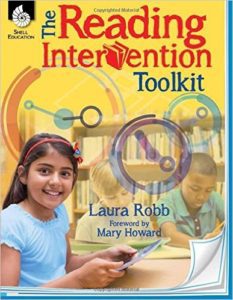
Laura has written many excellent books! Check out The Reading Intervention Toolkit

Teaching

Follow Laura on Twitter @LRobbTeacher

Follow The Robb Review Facebook Page!

Loading