Author: Laura Robb

Reading IS the Best Intervention

by Laura Robb

Each year, education publishers, promote programs that offer guarantees for boosting reading scores and transforming striving readers into students who read well and widely. These programs require total fidelity from teachers if students are to show progress on assessments. The problem is in order to show progress, most program’s assessments focus on collecting data only on the program’s materials that students have practiced. And data includes phonics, phonemic awareness, and fluency exercises; syllabication practice and worksheets with a short text and questions that test recall of information.  I take issue with these programs because:

  1. They don’t know anything about the children you teach: their strengths, needs, interests, and feelings about reading.
  2. They include short texts that don’t build the stamina students need to concentrate on reading a book.  Moreover, a diet of recall questions makes reading boring and fails to engage students in analytical and critical thinking.
  3. Reading wonderful books is not part of their intervention protocols.

Fragile learners—students three or more years behind their grade level—continue to lose reading ground because they aren’t reading.  Instead, they’re practicing skills in isolation, out of the context of reading.  In fact, they don’t have opportunities to practice and apply strategies and skills because their reading volume of books is close to zero. In his 1977 article, “If They Don’t Read Much, How Are They Ever Gonna Get Good?” Richard Allington wrote:

“Too often the procedures commonly employed in remedial and corrective reading instruction seem to mitigate against developing reading ability by focusing more on the mastery of isolated skills with relatively little emphasis on or instructional time devoted to reading in context. To become a proficient reader, one needs the opportunity to read. “

Allington’s words ring true today! For striving readers to improve and move forward, they need fifteen to twenty minutes every day at school to read self-selected books they can and want to read.  Teachers help them select “good fit” books that they can enjoy and that inspire them to read more!

What’s the Purpose of Interventions?

A question that teachers and administrators should revisit a few times a year, so they remain grounded in responding to the kinds of interventions appropriate for each student.  For me, the answer to this question is to help striving readers thrive and become proficient readers who love to read and choose reading at school and at home.  The best way to accomplish this is by helping students find books they want to and can read and enjoy. This means having a rich classroom library, with multicultural books on diverse reading levels that are relevant to students’ lives.

Once Students Are Reading, What Else Can Teachers Do?

In student-centered classrooms, teachers have an abundance of interventions at their fingertips. Confer with students to discover their feelings toward reading and whether their reading is fluent and expressive.  Listen to students’ discussions with a partner and small group to gain insights into how they view characters, conflicts, problems, and why characters change. You’ll notice whether students are inferring and drawing conclusions, pinpointing big ideas, etc. Read students’ notebooks for their written responses reveal their reactions, questions, and depth of comprehension and understanding. Then decide whether you need to meet with individuals or small groups to think-aloud, model, or re-teach a lesson.  Or, you might pair-up students who can support one another with notebook writing, figuring out tough words using context clues, etc.

Note that the interventions grow out of the needs each child exhibits based on their instructional and independent reading.  Everyone won’t need the same interventions. You, the skilled teacher, can develop interventions that are flexible and respond to and meet the needs of each child.

Why is the Classroom Teacher Important? 

The classroom room teacher is the most important interventionist. The research completed by Gretchen Owocki  (2010) points out that a skilled core curriculum teacher can improve the reading of 80 percent of his/her students.  Daily interactive read alouds, where the classroom teacher thinks aloud to model how he/she feels about a book, reacts to the story, figures out tough words using context, and applies strategies are interventions. Students’ self-selecting books for daily independent reading is an intervention that offers them time to practice and apply strategies. Instructional reading, supporting students’ growth as they read books that stretch their reading capacity with their teachers’ support, is an intervention. Notebook writing about reading that asks students to analyze and think deeply about texts is an intervention. Discussing books to develop critical thinking is an intervention.  Conferring that invites teachers to model and think-aloud and then asks students to practice, is an intervention.  

Somehow we’ve lost our way and bought into the notion that worksheets, isolated skill-and-drill lead to reading proficiency and joy in reading. Unfortunately, the results of the 2019 NAEP (The National Assessment of Educational Progress) tests in reading for grades 4 and 8 show the opposite. Scores have been flat for ten years, and 67 percent of fourth-graders who took the NAEP in 2019 read below proficient.  When students achieve a proficient score on the NAEP, it indicates that they have learned enough in fourth or eighth grade to do well in the next grade.  This. Isn’t. Happening. The result? Too many students are being left behind!

We Can Do Better

We can and must do better. It’s time to listen to Richard Allington who cautions teachers that our most fragile readers need to have texts of appropriate difficulty in their hands all day long (my italics). This means that schools invest in books at diverse reading levels so that every child will be reading throughout the day in social studies, science, math, electives, and during library classes.  Yes, reading is an intervention! And when students practice the skills related to reading expertise in the context of wonderful, inviting and engaging books, teachers can change the trajectory of their students’ reading lives.

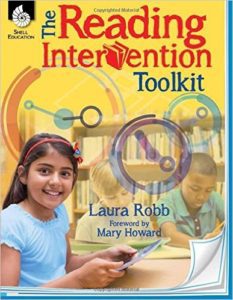
Laura has written many excellent books! Check out The Reading Intervention Toolkit
Teaching

Follow Laura on Twitter @LRobbTeacher

Follow The Robb Review Facebook Page!

Loading

Why Ask Questions?

by Laura Robb  (names are pseudonyms)

“All we do is read a few chapters and do worksheets. We never ask questions. No discussions. I hate worksheet packets and memorizing vocab for tests. I haven’t heard what my friends are reading. I want to talk about our questions. We never talk about anything much in class.”  

            Sorel, an eighth-grader, wrote these words in his notebook near the end of the first semester when his teacher, Ms. Walters, asked students: What changes would you like to see in reading?  The responses of most students repeated thoughts similar to Sorel’s. To her credit, Ms. Walters heard and absorbed her students’ comments. She had noticed their lack of interest and recognized the need to change. To students’ credit, they were honest and their candid comments nudged Ms. Walters to ask for coaching and risk the challenges of change.  At the end of October, Ms. Walters invited me to help her bring inquiry and student-led discussions of different books into her reading curriculum.

Reading and discussing professional materials, watching videos, and having frequent conversations about Ms. Walter’s myriad questions related to planning and observing lessons, supported change. Gradually, she moved from “my class” to “our class” by negotiating with students learning expectations and deadline dates as well as offering choices in independent reading. This short literacy snapshot illustrates the power of questions as a tool that can drive changes and foster a self-evaluative stance.

Why Pose Questions?

Readers and writers ask questions. Scientists and historians ask questions. Administrators and teachers ask questions. Posing questions is a way of understanding information, data, and experiences. In addition, raising questions supports learners as they dig deeper into a topic and text. With practice, wondering can also develop students meta-cognition—the ability to think about their learning, know what they understand, and identify areas that require additional practice

Too often in classes, questioning is actually recitation where the teacher prompts students for the “one right answer” to questions he or she asks. However, to develop independent readers and thinkers, to develop analytical and critical thinking skills, students need to be in the driver’s seat when it comes to asking and answering questions. 

When quality, student-generated questions define a class, meaningful learning takes place—learning that defines reading, research, collaborative projects, literary discussions, and notebook writing. As students wonder to learn, they begin to raise questions while reading and generate questions to solve problems, to research a topic, to conduct interviews, etc.

When Do Students Ask Questions?

Opportunities abound throughout the day for students to pose questions. Here are a few:

Mini-lessons:  Invite students to jot questions they have while you present a mini-lesson and ask these when you’ve finished. Such questions clarify students’ understanding and help them absorb new ideas. In addition, students’ questions can offer you insights into what they do and don’t understand about a lesson. With this information, you can design interventions based on observed needs.

Teacher read alouds:  Pause during your read aloud and invite students to pose questions about conflict, theme, or how events connect. Reserving a few minutes for students to share and discuss their questions shows them how much you value their thinking.  You’ll also gather insights into ways students react and respond to the text; this information informs future think-alouds, mini-lessons, and interventions..

Setting goals: Help students understand that raising questions such as, Is there a strategy I should work on next? What do I have to do to reach this goal?” can improve their learning. Such questions can develop independence because they place students in charge of decision-making and developing a plan to reach a goal.

Self-evaluation: Questions can also drive students’ evaluation of their work over time. Ask them to review and pose questions about several notebook entries, their entire process for a piece of writing, several quizzes, and tests, or their participation in collaborative projects. Here’s a sampling of questions that students might ask: Did I improve? How do I know I made progress? Is there something I did that stands out? Why did I struggle? What did I do to cope with my struggles? Did I seek help from a peer or teacher if I couldn’t resolve the issue?

A result of self-evaluative questions is the development of meta-cognition, the ability of students to reflect on their written work, assessments, and collaborations. Often, the result is that students accept the need for additional practice from their teacher or a peer that can support their growth as learners, critical thinkers, and problem solvers.

Questioning the Author: Isabel Beck’s and Margaret G. McKeown’s strategy, questioning the author, provides students with questions for fiction and nonfiction texts. The questions help students link words, phrases, and ideas to construct meaning from a passage they find challenging. To question the author, students might ask: Why did the author use that word or phrase? How does the word or phrase connect to the information in the sentence or to information that came before the sentence? How does the paragraph or section connect to the title? The theme or the main idea? The previous paragraph?  I suggest you put these questions on index cards that students can access because the questions can develop independence in unpacking meaning from challenging passages. Inquiry-based learning: Before and during a unit of study, students generate questions that drive their reading, investigations, experiments, and discussions. Researchers like Jeffrey Wilhelm and Michael Smith, show that when student-generated questions steer the direction studies take, they are more engaged and motivated to learn. Inquiry fosters collaboration, understanding information, analyzing texts, and researching topics.

Students Write Discussion Questions: Teach students how to pose open-ended, interpretive questions and invite them to work as a team when reading an assigned or self-selected text. Open-ended questions have two or more answers. Verbs such as, why, how, evaluate, explain, compare/contrast can signal interpretive questions. Returning to a text to write open-ended questions deepens students’ knowledge of plot and information, but it also raises the level of discussions to critical thinking. In addition, discussing their own questions motivates and engages students in the reading and exchanging ideas.

The Teacher’s Role

Providing a model for students, one that shows them how to raise questions during diverse learning experiences is what teachers do. For most students, becoming a skilled questioner won’t happen quickly. However, turning the questioning process over to students gives them opportunities to practice and to make their studies more meaningful. Meaningful reflection by teachers and students-–reflection that considers improving questioning techniques and gathering feedback can create a learning environment that values students’ wonderings as a path to progress and independence in learning.

Laura has written many excellent books! Check out The Reading Intervention Toolkit

Teaching

Follow Laura on Twitter @LRobbTeacher

Follow The Robb Review Facebook Page!
Loading

THE SECRET TO GREAT DISCUSSIONS

Breathe in, Hold for 10, and Try These 5 Techniques that Ensure Students Do the Talking 

by Laura Robb

We all know the statistics and, well, we talk right over them! Teachers do far too much talking in the course of the day, and students do far too little.  I don’t say that to teacher-bash, but rather as a way to invite you to hit the pause button on over-explaining and over guiding, and try these techniques that lead to student-driven, amazing discussions about the content you teach.

  1. Model the mindsets. You gotta be all-in! Fully commit to the goal of your students controlling the learning conversations. Talk about and co-construct charts of the characteristics of productive dialogue. The key characteristic? Active listening, which means students concentrate on what the speaker is saying and push aside distracting thoughts. Active listeners learn to respect theories and conclusions that differ from theirs—as long as the text provides adequate support for the assertions.
  1. Remember, old habits die hard. Raising hands doesn’t cut it during student-led conversations, so you’ll have to wean students off of that tradition. Instead, students talk, one at a time, while peers listen and process ideas. Once a student finishes, a peer jumps into the conversation. Tempted to rescue the conversation? Hold your breath, count to 10, trust your students. With practice in whole group, small group, and partner discussions, your students will thrive in a month or two.
  1. Equip students with question types. Model what it means to arrive at a guiding question, and then coach students to develop their own.  Guiding questions are those that can go broad and go deep, and align with students’ authentic curiosities about an issue. For example, fourth-graders were investigating self-selected books on natural disasters. Students agreed on this guiding question: How do natural disasters affect people’s lives? Even though each student read a different book, the guiding question was broad enough to stimulate rich conversations. Interpretive questions are also open-ended and have more than one answer. Have students consider verbs that will help them pose interpretive questions: analyze, examine, compare and contrast, evaluate, show, classify, I hand out lists of prompts to keep the discussion flowing to each student, so they have this concrete support at first.  
  1. Find your new niche. During discussions, especially as students are just getting the hang of purposeful dialogue, listen from the sidelines and every once in a while, and only when absolutely necessary, pose a clarifying question—one that nudges students to get back on course or go deeper in some way. For example, maybe the question gets a student to say more, define a term, go back to the text, or think about whether he or she still believes his position. Author Renee Houser reminds us that a lot of this nudging can be done without our even talking! Think about non-verbal gestures and facial expressions that might work.
  1. Be a listener. One of the many benefits of student-led discussions is that they allow you to listen and look at your students in new ways. Ask such questions as: Who is doing most of the talking? Which kids are obsessed with the same authors or topics? Who is particularly adept at active listening or posing questions? Which students have natural rapport? Who might I pair that may be in different groups of friends, but I now see will be great talk partners?

Give Yourself the Gift of Time

            Changing to student-led discussions won’t happen overnight! There’ll be bumps and roadblocks along the way. That’s a natural result of taking risks and putting students in the discussion driver’s seat!  It’s comforting to make the changeover with a colleague so you can chat, support one another, observe each other’s classes and move steadily forward. Be daring. Start today.

Loading

STAMINA…Readers Need It!

By: Laura Robb

Most of us view stamina in reading as the ability to concentrate on reading for at least 30 minutes. And indeed, that is part of stamina! But there’s more to it, and I’ll illustrate this additional aspect with a literacy snapshot.

            A student, Jenna, who I tutored for several years, left fifth grade reading a year above grade level. In fifth grade, her teacher had 15 minutes of independent reading of self-selected books every day. In addition, students had modified choice when selecting instructional reading texts, as the teacher offered students a range of texts to choose from with their instructional levels. Total time spent reading for fifth graders was 35 minutes a day in their hour-long ELA class.  By the end of the year, most students were getting the hang of reading longer books and enjoying them. 

In sixth grade, volume in reading stopped. Independent reading of self-selected books was spotty.  Students’ instructional reading was on a computer, and they read six to ten paragraph selections and answered 10 questions for each one. Just as Dick Allington’s research predicted, Jenna and her classmates began losing reading gains because they weren’t reading. Many showed this backward slide on benchmark testing and a criterion-referenced test administered mid-year.

            Recently, Jenna called me. “Will you help me with reading this summer?” she asked.

            “I’d love to read some books together and talk about them, but you’re reading is fine.”

            ‘That’s the thing,” she said. “I’m having trouble reading longer books at home. I get through three chapters, then I can’t remember stuff, so I stop.”

Readers Need This Kind of Stamina!

            Jenna describes a type of stamina that relates to focus and concentration and improves with practice. To read a long novel, students have to remember characters that appear in the beginning and pop up later in the book. They also have to hold in their memories different settings, plot details, conflicts, and decisions made earlier that affect a character in the middle and near the end of the book. Informational texts pose similar problems when learners have to recall names, places, data, and myriad details.  Students on a steady diet of short texts don’t meet or practice these types of reading demands. Reading. Long. Books. Does. Develop. Them.

What Good Readers Do

            Students expected to improve by practicing on computer programs often don’t make progress because they are missing what students who read long books do to continually move forward:

  • discuss texts with peers;
  • compose their own discussion questions;
  • write about reading in notebooks;
  • develop analytical and critical thinking skills;
  • take time to reflect on their reading;
  • connect ideas between and among books;
  • confer about their reading with a teacher and peer; and
  • explore authors and genres and develop personal literary tastes.

So, over the summer, Jenna and I will read longer and longer texts. We’ll discuss chunks. We’ll make connections. We’ll do some writing and analytical thinking.  Hopefully, she’ll regain her losses and develop both kinds of stamina. It’s interesting to note that in a research study published in ILA’s Journal of Adolescent & Adult Literacy (2000), educators identified indicators for students who scored high in reading on the international PISA test (The Program for International Student Assessment). The top indicator was that students read long texts. The second was that they completed a great deal of independent reading.

A Call to Action

It always amazes me that schools invest in programs that totally ignore the research on how and why students develop reading expertise. Exemplary teachers continually enlarge their knowledge of best practice and their skill set. Teaching skill develops with experience and through ongoing, self-directed professional learning.  Students need skilled teachers who respond to their needs. Students need skilled teachers who read aloud every day and invite students to learn from relevant books representing diverse cultures.

STAMINA…Readers Need It! INVEST in teachers! INVEST in books! And develop the stamina students require to become lifelong readers and critical thinkers.

Follow Laura on Twitter @LRobbTeacher

Check out Evan’s blog posts on ScholasticEDU!

Learn more about Laura’s ideas on reading- check out- Teaching Reading in Middle School

reading

Loading